
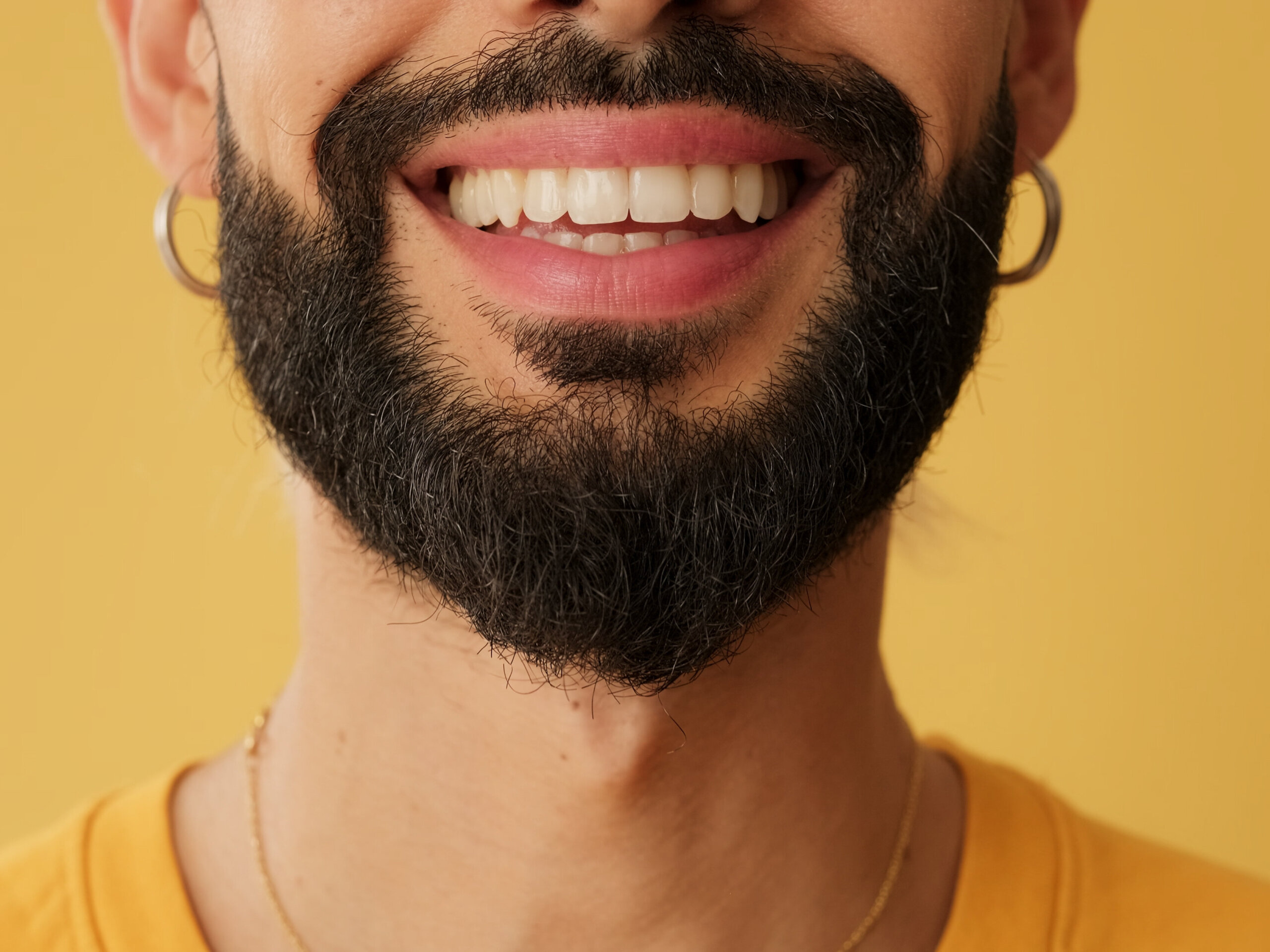
Brushing twice a day and still seeing yellow teeth in the mirror feels like a contradiction, yet the explanation usually sits beneath the surface of the enamel rather than on it. Tooth colour is decided by layers, light and years of slow chemistry, not by effort alone. Our article set out the real yellow teeth reasons and the treatments that address each one.
What Yellow Teeth Actually Are
A tooth is not a solid block of white material. The outer shell is enamel, a translucent mineral layer, and beneath it sits dentin, which carries a naturally yellow or amber tone. Light passes through enamel, strikes the dentin, and returns to the eye carrying that warmth with it. Yellow teeth therefore describe an optical result rather than a layer of dirt, which is why a toothbrush cannot always change the outcome. Thinner or more translucent enamel allows more dentin to show, and the tooth reads as darker even when the surface is spotlessly clean.
Surface Stains and Internal Colour Are Two Different Problems
Dentistry separates discoloration into two categories, and the distinction decides which treatment has any chance of working. Cleveland Clinic describes extrinsic discoloration as a change on the outer enamel surface, while intrinsic discoloration begins inside the tooth and affects the dentin underneath. Brushing, flossing, and professional cleaning act on the first category. The second responds only to chemical bleaching or to restorative cover, and in some cases resists both. Most people with persistent yellow teeth are dealing with a mixture of the two, in proportions that only a clinical examination can judge.
| Feature | Extrinsic discoloration | Intrinsic discoloration |
| Where it sits | On the enamel surface | Within enamel or dentin |
| Typical triggers | Coffee, tea, red wine, tobacco, pigmented sauces | Ageing, genetics, childhood antibiotics, trauma, fluorosis |
| Response to brushing | Reduced, especially when stains are recent | Essentially none |
| Response to professional cleaning | Good | Minimal |
| Usual clinical route | Polishing, whitening toothpaste, hygiene review | Bleaching, bonding, veneers |
Why Daily Brushing Does Not Stop Yellow Teeth
Brushing removes plaque and loose pigment. It does not add opacity to enamel, rebuild lost mineral, or lighten dentin, which means a flawless routine still leaves several yellow teeth reasons untouched. Two further details decide how much a routine achieves: when the brushing happens, and how forcefully it is carried out.
Timing Matters More Than Most People Expect
Acidic food and drink temporarily soften the enamel surface. Brushing at that moment can press the acid into the enamel and soften it further, which quietly works against the goal. A gap of roughly thirty minutes after citrus, wine, vinegar, or cola allows saliva to neutralise the acid and restore mineral balance first. Rinsing with plain water in the meantime removes the pigment that would otherwise settle. Seen this way, a brushing habit can be diligent and still contribute to the yellow colour of teeth over several years.
Longer and Harder Brushing Produces the Opposite Result
An hour of brushing whitens nothing. Enamel does not bleach through friction, and prolonged or aggressive scrubbing wears the surface thinner, which exposes more dentin and deepens the yellow. The same mechanism appears in abrasive home remedies. The American Dental Association’s review of whitening records a study in which a charcoal and salt mixture left teeth with a yellow cast, attributed to enamel removal that revealed the dentin beneath, alongside visible abrasion cavities on the front teeth. Two minutes, twice daily, with a soft brush and light pressure remains the limit of what mechanical cleaning usefully delivers.
Yellow Teeth: Reasons That Sit Outside Daily Habits
A large share of tooth colour arrives without permission. Inherited structure, the passage of time, prescribed medication, and underlying illness all shift the shade in ways no routine reverses, and recognising them prevents years of blaming the wrong thing.
Natural Teeth Colour Is Not Printed
Natural teeth do not come in a single shade, and a slight warmth is a normal finding rather than a defect. Enamel thickness, dentin tone, enamel translucency, and the shape of the tooth surface all influence how light returns to the viewer. Advertising imagery has shifted public expectation towards a uniform brightness that healthy dentition rarely produces on its own, which is why many people describe entirely normal teeth as yellow teeth.
The Effect of Genetics
Enamel thickness is inherited, as is the underlying dentin tone. Teeth that begin life with a thin enamel layer display their dentin earlier and more strongly, so two people with identical habits can end up with visibly different results. Certain developmental conditions, including amelogenesis imperfecta and dentinogenesis imperfecta, alter the structure of enamel or dentin directly and produce discoloration that no hygiene routine influences.
Ageing
Time changes teeth in two directions at once. Enamel grows thinner and more translucent through decades of chewing, grinding, and acid exposure, while dentin continues to deposit internally and darkens. The combined effect explains why yellow teeth become more common with each decade even among people who have never smoked and rarely drink coffee. Whitening still works on age-related change, although the starting point is lower and the maintenance interval shorter.
Medication
Tetracycline and doxycycline taken during tooth development bind into the forming structure and produce banding that sits permanently inside the tooth. Antihistamines, some blood pressure medications, and several other drug classes reduce saliva flow, and a dry mouth leaves acids and pigments sitting on the enamel for longer. Chlorhexidine mouthwash, prescribed for gum inflammation, carries its own well-documented staining effect when used over extended periods. A dentist or prescribing doctor can advise on alternatives where discoloration becomes a concern.
Diseases and Medical Treatment
Systemic conditions reach the teeth as readily as any other tissue. Calcium deficiency, coeliac disease, certain metabolic disorders and nutritional problems disturb enamel formation, while chemotherapy and head or neck radiation affect both enamel quality and saliva production. Where yellow teeth appear suddenly or affect a single tooth, a dental examination carries more value than any cosmetic product, since a darkening individual tooth can signal damage to the nerve inside.
Staining From Diet and Tobacco: The Avoidable Yellow Teeth Reasons
Extrinsic staining is the one category that daily choices genuinely control, and it accumulates in layers so gradual that the change rarely registers until an old photograph appears.
Food and Drink
Coffee, black tea, red wine, cola, soy sauce, tomato-based sauces, curry spices, and dark berries all carry chromogens that bind readily to enamel. Acidity compounds the problem by roughening the surface and giving pigment more to hold onto. Drinking through a straw reduces contact with the front teeth, and rinsing with water afterwards clears much of what remains. Frequency matters more than quantity here, since a coffee sipped across three hours bathes the enamel far longer than the same cup finished promptly, which is why grazing habits produce yellow teeth faster than larger but less frequent servings.
Smoking
Nicotine penetrates the microscopic porosity of enamel and produces a yellow to brown discoloration that resists brushing entirely. Tobacco also reduces blood flow in the gums and raises the risk of periodontal disease, which exposes root surfaces and darkens the overall impression further. Whitening performed on a smoker relapses noticeably faster, so clinicians generally raise the subject before treatment rather than after, since yellow teeth return within months where the habit continues.
Yellow Teeth Near the Gums and Around Braces
Two patterns bring patients to the clinic more often than any other, and both have structural explanations rather than hygiene ones.
Why the Gumline Looks Darker
Enamel is at its thinnest where the crown meets the root, so dentin shows through most strongly in exactly that zone. Several additional factors concentrate colour there:
- Gum recession exposes root surfaces, which are covered by cementum rather than enamel and appear distinctly yellower.
- Plaque and tartar accumulate along the gum margin and pick up pigment from food and drink.
- Brush bristles reach the gumline less effectively than the flat front surfaces of the teeth.
- Abrasion from heavy horizontal brushing wears the neck of the tooth and thins the enamel further.
- Older composite fillings placed near the gum darken at their margins over time.
Whitening gel lightens the exposed root far less predictably than it lightens enamel, which is why a professional assessment precedes treatment in these cases.
Braces, Brackets and White Spot Lesions
Fixed appliances make plaque removal harder, and the enamel around each bracket demineralises where plaque sits undisturbed. The surrounding tooth often retains more colour, so the contrast after debonding reads as patchy rather than uniformly yellow. White spot lesions linked to orthodontic treatment often become less noticeable as the background shade of the tooth lightens, which shapes how clinicians sequence care. Whitening while brackets remain in place produces uneven results, so treatment generally waits until the appliance has been removed and the enamel has been allowed to remineralise for several weeks.
How to Treat and Prevent Yellow Teeth
Treatment follows diagnosis rather than preceding it, because the same yellow colour of teeth can arise from surface pigment, thin enamel or internal banding, and each responds to a different intervention. A clinical examination separates them and sets a realistic expectation for the shade change available.
Professional and At-Home Whitening
Peroxide bleaching remains the first option for most patients. Teeth whitening can be performed in the clinic with a concentrated gel, or at home with custom trays supplied by the dentist, where ADA literature records carbamide peroxide concentrations typically ranging from 10% to 38%. Over-the-counter products work on the same chemistry at lower strength and need considerably longer: one comparison cited by the ADA found an over-the-counter technique required 16 days to reach the result of a seven-day tray system or a single in-office session. Deep tetracycline staining sits at the far end of the scale and may require three to four months of nightly treatment.
Managing Sensitivity and Expectations
Temporary sensitivity is the most common side effect of bleaching, and a Cochrane review of home whitening found tooth sensitivity and oral irritation to be the most frequent adverse effects, more common with stronger agents yet minor and short-lived. Custom trays, lower gel concentrations and desensitising agents reduce the discomfort considerably, and none of them compromise the shade change achieved on yellow teeth. One structural limit deserves attention before treatment begins: crowns, veneers and composite fillings do not change colour with bleaching, so existing restorations may need replacing once the natural teeth around them have lightened.
Veneers and Smile Makeover
Where discoloration sits too deep for bleaching, or where enamel has worn substantially, a restorative route delivers what chemistry cannot. Custom veneers cover the outer surface of the tooth and establish shade, shape, and alignment together, while a comprehensive smile makeover combines treatments across the whole visible arch for consistency. Both routes are planned around the existing tooth structure, so an examination determines which option suits a given case.
Prevention That Holds Over Time
Maintaining a result costs far less effort than achieving one. The habits below slow the return of yellow teeth without demanding anything unrealistic:
- Brushing for two minutes twice daily with a soft brush and fluoride toothpaste, using light pressure.
- Waiting around thirty minutes after acidic food or drink before brushing, with a water rinse in the interval.
- Daily interdental cleaning, since pigment settles between teeth where a brush never reaches.
- Limiting the frequency of coffee, tea, red wine, and cola rather than only the quantity.
- Stopping smoking, which protects both tooth colour and gum health.
- Professional cleaning and examination twice a year to remove tartar before it darkens.
Reading the Real Signal Behind Yellow Teeth
Yellow teeth rarely indicate neglect. In most cases, they reflect enamel thickness, accumulated years, inherited structure, and the chemistry of a daily diet, with brushing acting on only one part of that picture. Recognising which category applies turns a frustrating cosmetic complaint into a solvable clinical question, and the answer ranges from a hygiene adjustment to professional whitening or a restorative plan. At Smile Team Turkey, our dentists assess the cause before recommending treatment, so the route chosen matches the reason your teeth changed colour in the first place.
Frequently Asked Questions About Yellow Teeth
Can whitening toothpaste genuinely change tooth colour?
Whitening toothpastes work mainly through mild abrasives that lift surface pigment, and some contain low levels of peroxide. They address recent extrinsic staining and leave the internal shade of the tooth unchanged, so the visible improvement is modest and plateaus quickly. Yellow teeth caused by thin enamel or dentin tone stay exactly as they were.
How long do whitening results last?
Most patients retain a noticeable improvement for one to three years, with the range decided largely by diet and tobacco use. Heavy coffee, tea, or red wine consumption shortens that window considerably, and a short top-up with custom trays usually restores the shade without repeating the full protocol.
Is a single dark tooth treated the same way as general discoloration?
No, and the difference matters. One tooth darkening on its own often indicates trauma or a nerve that has lost vitality, which calls for radiographs and possibly internal bleaching after root canal treatment rather than a surface approach.
Are children and teenagers suitable candidates for whitening?
Paediatric dental guidance discourages full-arch cosmetic bleaching while the mixed or primary dentition is still present. Younger patients also have larger pulp chambers and more sensitivity risk, so assessment and conservative measures are preferred until development has finished.
Does oil pulling or charcoal powder whiten teeth?
Evidence does not support either. Charcoal products are abrasive and lack demonstrated whitening benefit, while oil pulling has no documented effect on tooth colour and has been linked to unrelated health complaints in case reports.
You can read our previous article at https://smileteamturkey.com/blog/causes-and-treatments-of-overbite/