
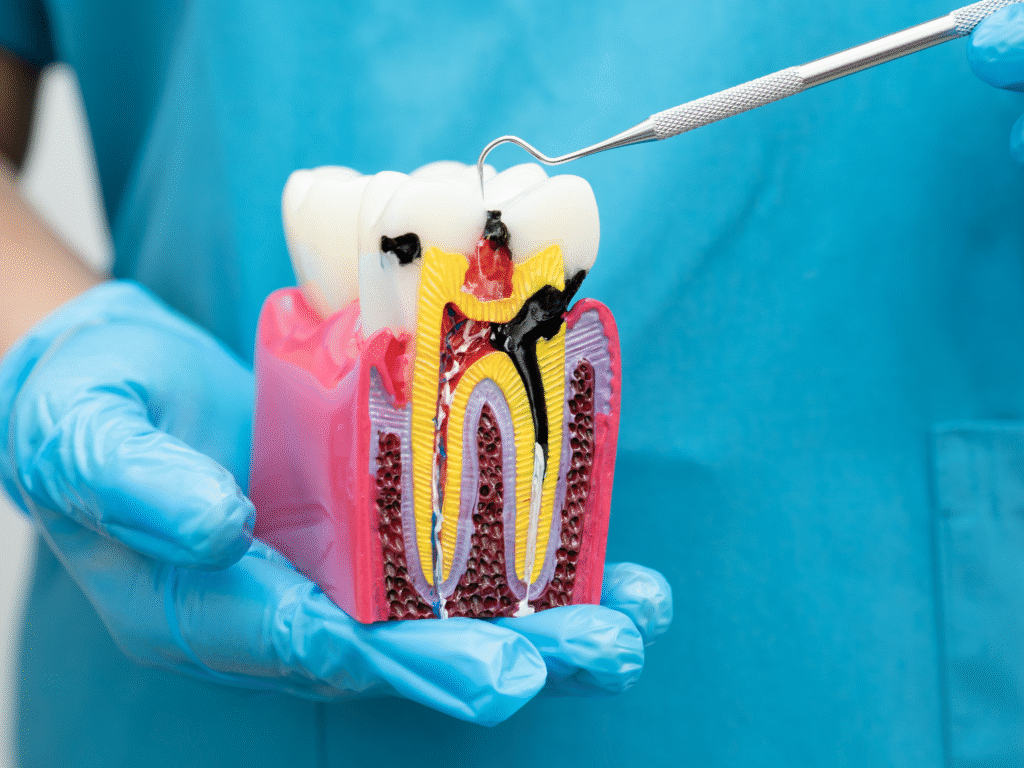
Teeth problems rarely announce themselves at full volume. A faint twinge with cold water, gums that bleed once a week, a shade of grey that was not there last year: these quiet signals usually arrive long before real pain does. This guide examines the most common teeth problems, the biological mechanisms behind them, the symptoms that deserve attention, and the treatments dental professionals rely on at each stage.
What Teeth Problems Describe in Clinical Terms
Dentistry groups teeth problems into a few distinct families, and the distinction matters because each family responds to a different treatment pathway. A cavity is tissue destruction caused by acid. Gum disease is an inflammatory response to bacteria. Misalignment is structural. Discolouration is largely cosmetic until it signals something deeper. Patients who understand which category their symptom belongs to tend to arrive at the right appointment far earlier.
The four broad families cover almost everything a general dentist sees in a working week:
- Teeth diseases: decay, pulp infection, and abscess formation affecting the tooth structure itself
- Periodontal conditions: gingivitis and periodontitis affecting gums, ligament, and supporting bone
- Teeth disorders: crowding, spacing, bite irregularities, grinding, and enamel defects present from development
- Surface and soft tissue issues: staining, sensitivity, and persistent bad breath
Scale explains why this subject carries weight. The World Health Organization estimates that oral diseases affect close to 3.7 billion people, with untreated decay in permanent teeth ranking as the single most widespread health condition recorded globally.
Causes of Dental Problems: What Happens Before Symptoms Appear
Most teeth problems begin as a slow chemical process rather than a sudden event. Understanding that sequence changes how patients interpret their own early warning signs.
Plaque, Diet, and the Acid Cycle
Oral bacteria metabolise fermentable carbohydrates and release acid as a by-product. Each exposure lowers the pH at the tooth surface and pulls mineral out of the enamel. Saliva reverses this over the following half hour, redepositing calcium and phosphate. Decay develops when the frequency of acid attacks outpaces that natural repair cycle. This explains a point many patients find counterintuitive: a sugary drink sipped across two hours causes more damage than the same drink finished in five minutes, because frequency matters more than quantity.
Genetics, Saliva Flow, and Medication
Enamel thickness, groove depth on molars, tooth position, and saliva composition are inherited traits, which is why two people with identical habits can face very different outcomes. Reduced saliva flow, whether from certain antidepressants, blood pressure medication, antihistamines, or radiotherapy, removes the mouth’s main buffering system. Smoking restricts gum blood supply and masks bleeding, allowing periodontal damage to advance silently. Diabetes, hormonal shifts during pregnancy, and acid reflux each alter the oral environment in ways that accelerate common teeth problems.
7 Common Teeth Problems and How Dentists Treat Them
The following conditions account for the overwhelming majority of dental appointments worldwide. Each entry covers what occurs biologically, which symptoms signal it, and the treatments currently used.
Dental Cavities
Nearly all patients worldwide experience dental cavities at some point. Cavities occur when plaque accumulates on the teeth and erodes the tooth enamel, progressing from a chalky white spot to a visible hole and eventually into the dentine beneath. Brushing twice daily and flossing once daily remains the foundation of prevention. Some patients opt for the technological route when it comes to the electric toothbrush vs. manual toothbrush question, reasoning that it results in a more thorough cleaning. Either way, our post on how to brush your teeth properly covers the technique in depth. According to the CDC, one in five adults aged 20 to 64 has at least one untreated cavity, a reminder of how often early decay goes unnoticed.
Early lesions can sometimes be remineralised with fluoride application. Established cavities are treated with dental fillings. If the cavity is very deep and the remaining tooth structure is compromised, dental professionals can suggest dental crowns as a treatment, often following root canal therapy when the pulp is involved.
Gum Disease
Gum health is generally neglected, yet it is as important as the health of the teeth themselves. Several forms of gum disease occur, and severity ranges from mild swelling and bleeding to tooth loss. The process starts as gingivitis, where plaque irritates the soft gum tissue and triggers inflammation. At this stage, the condition is fully reversible. Left alone, the inflammation reaches the ligament and bone, pockets form between the gum and tooth, and periodontitis sets in. Bone loss at that point is permanent. Tobacco use and diabetes both raise the risk considerably.
The relationship between teeth and gums deserves its own reading before moving on to treatment, which our guide to routines for healthy teeth and gums addresses directly.
Treatment begins with scaling and polishing to remove plaque and hardened calculus. Deeper pockets call for root planing, which smooths the root surface so tissue can reattach. Where gum disease has already caused tooth loss, dentists can suggest dental implants to replace the missing tooth once the remaining tissue is stable.
Tooth Loss
Several common teeth problems, particularly gum disease and advanced decay, end in tooth loss when early stages pass untreated. Root infections and deep decay respond well to timely intervention, which is why the window matters so much. A gap also carries consequences beyond appearance: neighbouring teeth drift, the opposing tooth over-erupts, and the jawbone beneath the missing tooth begins to resorb within months.
When tooth loss occurs, dentists suggest dental implants or dentures to replace the missing tooth. Dental implants remain a durable, permanent option for tooth replacement, since the titanium post stimulates the bone in a way that bridges and dentures cannot. Dentists can apply implant procedures when the patient’s gum tissue and bone structure are healthy enough to hold the strength required. All-on-4 dental implants serve patients who have lost most or all of an arch. Dental bridges remain another established route for replacing a missing tooth.
Tooth Sensitivity
Many patients suffer from tooth sensitivity, experiencing sharp pain or discomfort on contact with sweets, cold air, hot drinks, or cold drinks. The mechanism involves exposed dentine, a layer threaded with microscopic tubules leading to the nerve. Gum recession, enamel wear from grinding or acidic diets, and cracked teeth all expose it.
Sensitivity sometimes signals an underlying cavity or a fracture rather than simple exposure, which is why a diagnosis precedes treatment. Desensitising toothpaste containing potassium nitrate or stannous fluoride helps milder cases over several weeks. Persistent sensitivity responds to fluoride varnish, bonded restorations, dental fillings, or dental veneers depending on the cause and the extent of tissue loss.
Misaligned Teeth
Alignment of the teeth can be problematic, and this type of tooth disorder affects social confidence considerably. The functional side receives less attention: crowded teeth trap plaque in places floss struggles to reach, and an uneven bite concentrates force on individual teeth, contributing to wear, fracture, and jaw joint discomfort over time. Treatment ranges from clear aligners and fixed braces to restorative approaches. A smile makeover comprises different steps, including orthodontic and periodontal treatments, planned together rather than in isolation.
Bad Breath
Bad breath, known clinically as halitosis, troubles many patients and affects daily interaction. It is generally a side effect of other teeth problems rather than a condition in itself. Volatile sulphur compounds produced by bacteria on the tongue account for the majority of cases, while gum disease, an untreated cavity, a failing restoration, dry mouth, sinus infection, and acid reflux make up most of the remainder. Persistent odour that survives brushing and mouthwash points toward a source that only an examination can locate.
Teeth Discolouration
The colour of teeth depends on diet, genetics, and oral health routines. Many patients experience teeth discolouration across their lifespan. Extrinsic staining builds on the enamel surface from red wine, coffee, tea, and tobacco. Intrinsic discolouration sits within the tooth and arises from ageing, trauma, certain antibiotics taken during tooth development, or a non-vital tooth after injury. The distinction determines the result, since surface stains lift readily while intrinsic shades respond far less predictably.
As a major part of the dental treatments we offer in Turkey, professional teeth whitening procedures are featured regularly, since local and international patients are well aware of the results. Outcomes still depend on genetics, oral health routine, and diet, and teeth with intrinsic staining are often better served by veneers or bonding.
Teeth Problems: Symptoms and How Quickly They Need Attention
Not every symptom carries the same urgency, and patients frequently delay the ones that matter most while worrying about the ones that can wait. The table below maps the most frequently reported symptoms against their likely origin and a realistic timeframe for seeking care:
| Symptom | What it commonly indicates | Suggested timeframe |
| Facial swelling with throbbing pain | Dental abscess or spreading infection | Same day, urgent |
| Pain lingering after hot or cold exposure | Pulp inflammation, possible root canal need | Within days |
| Bleeding gums while brushing | Gingivitis, reversible at this stage | Within weeks |
| Loose adult tooth | Advanced periodontitis or trauma | Within days |
| Brief twinge with cold | Exposed dentine or early decay | Next routine visit |
| Persistent bad taste or odour | Infection, failing restoration, or gum pocket | Within weeks |
Teeth Problems in Adults: How the Pattern Shifts With Age
The teeth problems that dominate a patient’s twenties look very different from those of their fifties, and recognising the shift helps patients anticipate rather than react. Decay dominates early adulthood, while periodontal conditions and wear take over later.
- Twenties and thirties: new cavities, wisdom tooth complications, and the first signs of gingivitis
- Forties and fifties: gum recession, root surface decay, grinding-related wear, and failing older fillings
- Sixties onward: periodontitis, dry mouth from long-term medication, and the consequences of earlier tooth loss
Restorations contribute their own timeline. A filling placed twenty years ago eventually develops marginal leakage, allowing decay to form beneath an outwardly intact surface. Many adults who assume their teeth problems are behind them are in fact reaching the point where previous dental work requires review.
Daily Habits That Keep Teeth Problems From Returning
Prevention carries more weight than any single treatment, and most of it happens at home rather than in the clinic. Our guide to oral care covers the fundamentals, and the habits below support them:
- Brushing twice daily for two minutes with fluoride toothpaste, angled toward the gum line
- Cleaning between the teeth once a day with floss or interdental brushes
- Limiting the frequency of sugary and acidic intake rather than only the total amount
- Waiting around thirty minutes after acidic food or drink before brushing, since enamel is temporarily softened
- Attending professional cleaning and examination appointments at intervals the dentist recommends
- Addressing grinding with a night guard where wear facets or morning jaw tension appear
Living Without Everyday Teeth Problems
Most people experience teeth problems at some stage, yet that outcome is not fixed. Consistent brushing, daily interdental cleaning, attention to diet, and regular examinations prevent the majority of cases long before treatment becomes necessary. Where dental problems have already taken hold, early intervention preserves options that disappear as conditions advance: a filling instead of a crown, scaling instead of surgery, a saved tooth instead of an implant. Patients who contact their dentist at the first sign of bad breath, bleeding, or sensitivity consistently face shorter, simpler, and less costly treatment than those who wait for pain. Further reading on treatment planning is available in our frequently asked dental questions post.
Frequently Asked Questions About Teeth Problems
Can teeth problems be diagnosed accurately from photographs?
Photographs reveal surface-level findings such as staining, visible cavities, crowding, and gum recession, which is why searches for types of teeth problems with pictures are so common. They cannot show what sits beneath the enamel or below the gum line. Decay between teeth, bone loss, root infection, and cracks require radiographs and clinical probing, so a photo-based opinion functions as an indication rather than a diagnosis.
Is there a connection between teeth problems and general health?
Research consistently associates periodontal disease with cardiovascular disease, poorly controlled diabetes, and adverse pregnancy outcomes. The relationship runs in both directions, since diabetes worsens gum inflammation and gum inflammation complicates blood sugar control. Association does not establish direct causation in every case, though the evidence is strong enough that physicians increasingly ask about oral health during chronic disease management.
Do children experience the same teeth problems as adults?
Children share decay and alignment issues but face them differently. Baby teeth have thinner enamel, so decay progresses faster and reaches the nerve sooner. Early loss of a baby tooth also disturbs the spacing that permanent teeth rely on, which can create crowding later. Gum disease, by contrast, appears far less frequently in childhood.
Can several teeth problems be treated during a single course of treatment?
Combining procedures is standard practice when the clinical sequence allows it. Gum health usually needs stabilising before restorative or cosmetic work begins, and implants require a healing period before the final restoration. A treatment plan maps which stages run together and which require separate visits, something determined after examination and imaging.
Why do teeth problems sometimes return after treatment?
Treatment addresses damage but not the conditions that produced it. A filling restores structure while the dietary frequency, saliva flow, or cleaning gaps that caused the original decay remain unchanged. Restorations also have a finite service life, and margins eventually wear. Recurrence usually reflects an unresolved underlying factor rather than a failed procedure.