
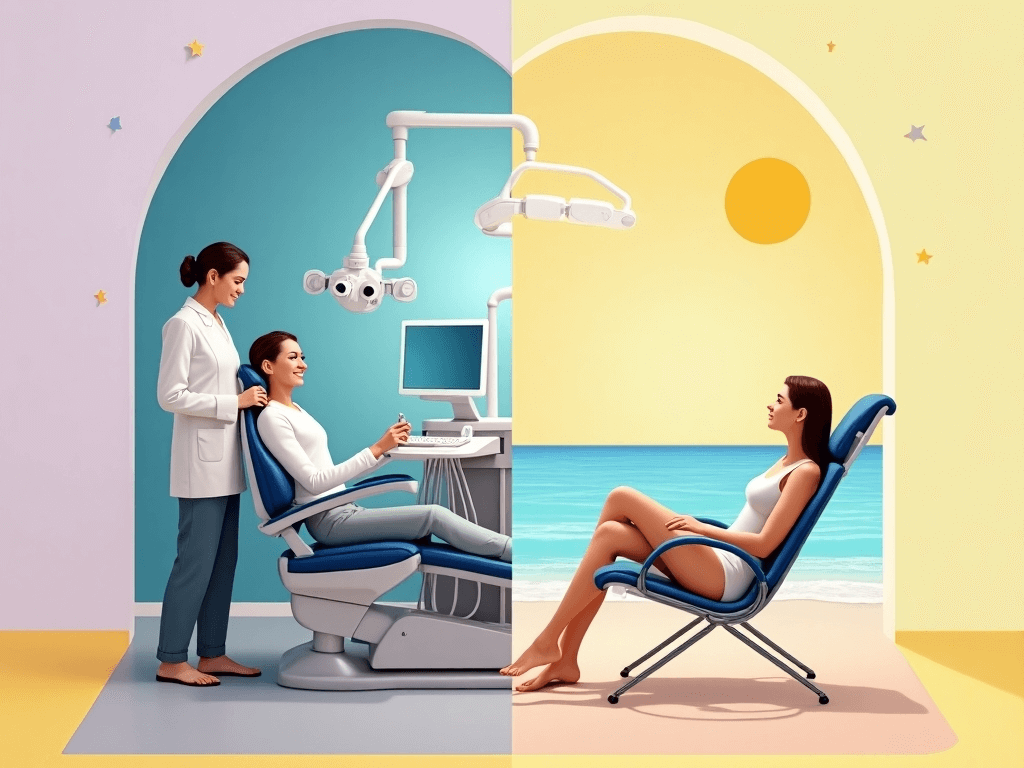
A dental holiday in Turkey pairs planned treatment with genuine recovery time, which is why it suits patients who have waited months for an appointment closer to home. This article covers what the trip involves clinically, how packages and pricing are structured, which details belong in writing before departure, and how a realistic schedule keeps the whole experience comfortable.
What a Dental Holiday in Turkey Involves
The format is simpler than most first-time travellers expect. Treatment is planned remotely from photographs and X-rays, appointment dates are fixed before flights are booked, and the stay is built around the clinical schedule rather than the other way round. Chair time usually occupies a few hours across several days, leaving the remaining hours for rest or sightseeing. Tens of thousands receive dental veneers and implants in Turkey annually, and Antalya and Istanbul have developed the hotel, transfer, and translation infrastructure that supports this volume. Anyone researching Turkey teeth options quickly discovers how standardised the patient journey has become.
Treatments Patients Usually Plan Around
Not every procedure travels equally well. Treatments that finish within a predictable number of appointments suit a single trip, while anything depending on biological healing is naturally split across two visits. The most commonly scheduled procedures include:
- Porcelain or zirconia crowns and veneers, usually completed within a week
- Single and multiple dental implants, with restoration placed after healing
- Full arch solutions such as All-on-4 and All-on-6
- Root canal treatment and restorative work on existing teeth
- Professional whitening and hygiene appointments added alongside larger plans
- Replacement of older crowns, bridges or ill-fitting dentures
Why More UK Patients Are Choosing Dental Holidays in Turkey
Access pressure at home explains a considerable share of the interest. NHS Business Services Authority figures show 18.8 million adults were seen by an NHS dentist in the two years to March 2026, roughly 40% of the adult population, which leaves a substantial group weighing private fees against travel. Once private treatment becomes the realistic route, the comparison shifts from NHS versus abroad to private UK versus a dental holiday in Turkey, and the arithmetic changes considerably. Waiting times, treatment scope and the ability to complete several procedures in one concentrated block all enter the decision.
Patient motivations tend to cluster around a handful of practical points rather than price alone:
- Treatment plans that begin within weeks instead of months
- Several procedures consolidated into one scheduled stay
- Written quotations issued before travel, with the full plan priced in advance
- Accommodation, transfers and interpreting handled by the clinic
- Recovery time spent somewhere pleasant rather than between work commitments
The Clinical Foundations Behind Turkish Dentistry
Turkish dental education developed alongside European faculties from the nineteenth century onward, and dentistry remains one of the most competitive university routes in the country. That selectivity matters, since graduates enter a market where international patients arrive with complex restorative needs and high aesthetic expectations. Many general dentists continue into postgraduate specialisation in implantology, prosthodontics or endodontics in order to handle demanding full-mouth rehabilitations. Turkish dentists also work with the same implant systems, ceramics and digital scanning equipment used across Western Europe, which keeps restorative protocols familiar to any dentist who later reviews the work at home.
Regulation, Accreditation and Volume
Scale has brought oversight with it. Türkiye recorded 1,398,580 international health visitors in 2025, generating 3.02 billion dollars in health tourism revenue, and clinics serving that volume operate under Ministry of Health authorisation for international patient services. Accreditation is not a guarantee of any individual outcome, though it does indicate documented protocols for sterilisation, record keeping and complication management. Patient volume additionally produces a long public record. Reviews, verified photographs and treatment timelines published by previous patients remain among the most useful indicators available before any deposit changes hands.
Do Dentists Speak English in Turkey?
Communication quality shapes the clinical result more than most patients anticipate. English is widely spoken across Turkish dental teams, and conversations about shade selection, tooth shape, bite comfort, and pain thresholds work best without an intermediary. Where a patient speaks neither Turkish nor English, clinics in the main treatment hubs provide interpreters in German, Arabic, Russian, and several other languages. A consultation where expectations are described precisely, and where the dentist explains what the material can and cannot achieve, prevents most of the disappointment that surfaces later.
What Dental Holiday Packages in Turkey Usually Cover
Package contents vary between clinics, so the written itinerary matters more than the headline figure. Most dental holiday packages in Turkey bundle airport transfers, hotel nights near the clinic, in-city transport on appointment days, and interpreting support alongside the clinical work. Flights are sometimes arranged separately. The table below outlines how different treatments typically map onto a trip, with timings that reflect standard protocols rather than any single clinic’s schedule.
| Treatment | Typical appointments | Usual stay | Second visit |
| Veneers or crowns | 3 to 4 | 6 to 8 days | Rarely required |
| Single implant | 2 to 3 across both trips | 3 to 5 days | After healing confirmed |
| Full arch implants | 4 to 6 across both trips | 7 to 10 days | After healing confirmed |
| Root canal treatment | 1 to 2 | 2 to 4 days | Not usually needed |
| Whitening and hygiene | 1 to 2 | 1 to 2 days | Not applicable |
Implant timing deserves particular attention when a two-trip plan is discussed. Osseointegration, the process through which the jawbone fuses to the implant surface, can take anywhere from three to nine months. Temporary restorations bridge that interval, and implants receive their permanent crowns only once integration has been verified. Any schedule promising permanent restorations on fully healed implants within a fortnight deserves a direct clinical explanation.
Dental Tourism Turkey Prices, Insurance and What Belongs in Writing
Dental tourism Turkey prices move with the treatment plan rather than with a fixed tariff, so the cost may vary depending on your budget and dental treatment prices, and planning accordingly is what keeps a trip comfortable. Istanbul has acquired its reputation as a dental hub largely because comprehensive treatment plans remain affordable at a standard most Western patients recognise. Procedures such as whitening, crowns and implants frequently cost a fraction of equivalent private fees in the United Kingdom or United States, which is what makes dental care abroad viable even once flights and accommodation are counted. The saving narrows on small single treatments and widens considerably on multi-unit restorative work, so the comparison is worth running against an itemised quotation rather than an average.
Insurance behaves differently abroad, and written confirmation prevents unpleasant surprises. Cosmetic procedures are commonly excluded from private dental policies regardless of where they are performed, while restorative work occasionally qualifies for partial reimbursement. The following details are worth securing in writing before departure:
- An itemised quotation listing materials, brands and unit numbers
- Written confirmation of what the insurer reimburses for treatment performed overseas
- The guarantee period covering each restoration and what invalidates it
- Whether revision appointments carry additional clinical charges
- Travel insurance terms relating to planned medical treatment
- Full clinical records and X-rays released for a dentist at home
How to Plan a Smooth Dental Holiday in Turkey
Holidays are about relaxing and rejuvenating, and the appeal of combining that with treatment explains why dental holidays in Turkey have grown so quickly. A smooth trip comes down to sequencing, since each stage depends on information gathered in the one before it. The four stages below reflect how most patient journeys unfold from first enquiry to final checkup.
Stage 1: The Online Consultation
Everything begins with a remote assessment. A patient coordinator reviews dental history, recent X-rays, and intraoral photographs, then passes them to the treating dentist for a provisional plan. Small details carry weight here, including existing crowns, previous extractions, gum condition, grinding habits, and any medication affecting healing or bleeding. The resulting plan arrives with a treatment sequence, estimated chair time, and a cost breakdown, which gives a realistic picture well before any dental trip to Turkey is confirmed.
Stage 2: Dates, Flights and Accommodation
Clinic availability leads, and flights follow. Confirming appointment dates first avoids the common error of booking non-refundable tickets around a schedule that was never fixed. Clinics arranging accommodation typically place patients within a short transfer of the treatment rooms, which matters more than hotel grading when several appointments fall across one week. An itinerary emailed in advance, listing each appointment and its expected duration, allows the remaining days to be planned around the coast, the old city, or simply unhurried rest.
Stage 3: Arrival and Treatment Days
Arrival is handled with a driver meeting the patient at the airport and transferring directly to the hotel or clinic. The first clinical appointment repeats the assessment in person, since intraoral examination and fresh imaging occasionally adjust a remote plan. Treatment then proceeds the same day or the next, depending on preference and the work involved. Appointment days tend to be shorter than expected, with preparation, impressions, try-in sessions, and fitting spread across separate visits so the laboratory has time to produce restorations properly.
Stage 4: Final Checks and Returning Home
A final appointment before departure confirms bite comfort, margins, shade, and gum response, which is the right moment to raise anything that feels uneven rather than after landing. Clinical records, implant passports and material certificates travel home with the patient. Any dentist consulted later then has the documentation needed to monitor the work, and the guarantee terms agreed before treatment determine how revisions are handled should they ever become necessary.
Making Your Dental Holiday Turkey Experience Work End to End
A dental holiday in Turkey rewards preparation more than spontaneity. The patients who return satisfied are generally those who secured an itemised plan early, questioned timelines that sounded compressed, kept flight dates flexible until appointments were confirmed, and carried their records home in full. Everything else, from transfers to hotel nights, tends to be handled by the clinic. Treatment in Turkey offers genuine clinical depth alongside recovery time in a country worth seeing, and the combination holds up when the schedule is built around the dentistry rather than around the sightseeing. Anyone ready to begin can receive a provisional plan before committing to any dates.
It’s time to book your appointment and head to the best dental travel in Turkey.
Frequently Asked Questions About Dental Holiday in Turkey
Is flying safe shortly after dental surgery?
Short-haul flights are generally tolerated well within one to two days of routine extractions or implant placement, provided bleeding has settled and the treating dentist has approved departure. Cabin pressure changes occasionally cause sensitivity around recently treated teeth. Patients who received sedation require a longer interval, and the clinic confirms a safe departure window at the final checkup.
What happens if a crown or veneer needs attention after returning home?
Guarantee terms agreed before treatment determine the response. Many clinics cover remakes of restorations that fail within the guarantee period, with the patient covering travel. Minor adjustments such as bite refinement can often be handled by a local dentist using the records supplied, which is one reason full documentation matters at discharge.
Which season suits a dental holiday in Turkey best?
Spring and autumn tend to work well, since milder temperatures make recovery days more comfortable and clinic schedules are less compressed than in peak summer. Winter brings lower flight and hotel costs along with shorter waiting times for preferred appointment slots. Summer remains popular with families, though heat can feel demanding immediately after surgical procedures.
Can a companion travel on the same package?
Most clinics accommodate a companion within the same hotel booking and transfer arrangements, usually at an additional cost covering the extra room occupancy. Travelling with someone is particularly sensible for patients undergoing sedation or extensive surgical work, since assistance during the first twenty-four hours after treatment makes recovery considerably easier.
Are there activities worth avoiding between appointments?
Swimming in the sea or pools is best postponed while surgical sites are healing, as are strenuous exercise, prolonged sun exposure and alcohol during the first days after surgery. Gentle sightseeing, boat trips and relaxed dining cause no difficulty. Smoking carries the clearest clinical risk, since it measurably impairs healing around implants and extraction sites.
You May Be Interested In: