
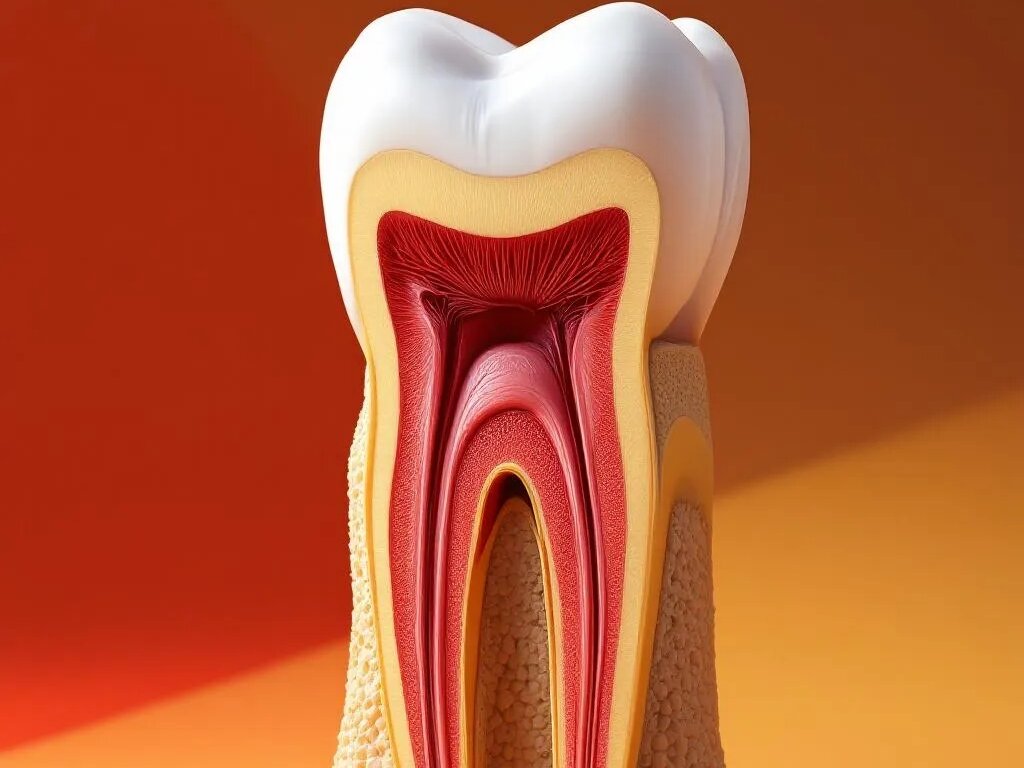
A throbbing tooth that wakes you at night or a swelling near the gumline rarely appears out of nowhere. Often, it’s the first sign of a root canal infection developing beneath the surface. This guide walks through what a root canal infection actually is, the most common causes behind it, the symptoms worth paying attention to, and how dentists typically treat and price the procedure, so the condition feels less confusing and easier to act on early.
What Is a Root Canal Infection?
Inside every tooth lies a soft chamber known as the pulp, filled with nerves, blood vessels, and connective tissue. When bacteria breach the tooth’s protective layers, usually through a crack, a deep cavity, or a failing restoration, they reach this chamber and settle in. The result is a root canal infection: a bacterial invasion of the pulp and, eventually, the root of the tooth.
Because the pulp has no room to swell, pressure builds quickly inside the tooth, which is why a root canal infection tends to feel more intense than an ordinary cavity. Left in place, the bacteria don’t stay contained. They travel through tiny channels at the tip of the root and into the surrounding bone, where an abscess can form.
A root canal infection is one of the few dental conditions where waiting rarely helps. The tissue inside a tooth cannot heal itself once bacteria take hold, so the infection either gets treated or continues to spread.
Why Is Root Canal Treatment Needed?
Once bacteria have damaged the pulp, the tooth loses its ability to fight the infection on its own. Dental X-rays typically reveal a dark shadow at the root tip, a telltale sign that infection has reached the bone. At that stage, root canal treatment becomes the standard way to save the tooth.
The procedure removes the infected tissue, disinfects the canal, and seals the space so bacteria cannot re-enter. Without it, several outcomes become more likely:
- The infection spreads to neighboring teeth or the jawbone
- An abscess forms, causing swelling and persistent pain
- In rare, advanced cases, the infection reaches the bloodstream or facial spaces, becoming a medical emergency
Because of this progression, dentists generally treat a confirmed root canal infection promptly rather than monitoring it over time.
What Causes Root Canal Infections?
A root canal infection rarely appears overnight. It usually results from an earlier dental problem that went unaddressed.
Untreated Cavities and Tooth Decay
A cavity that isn’t treated for several months gives bacteria a direct path toward the pulp. As decay eats through enamel and dentin, the distance between the bacteria and the nerve shrinks, and infection becomes almost inevitable once that barrier is breached.
Old or Damaged Dental Fillings
Fillings wear down with time. A filling that has cracked, loosened, or simply aged past its intended lifespan can leave microscopic gaps where bacteria slip through unnoticed. Routine dental check-ups are the main way these weak points get caught before they progress into infection. You can read more prevention-focused advice in our earlier article on the reasons and treatment of enamel erosion.
Infection Under a Crown
Crowns protect a tooth, but only as long as their seal holds. A chipped, loose, or poorly fitted dental crown creates an opening where bacteria can travel underneath, reaching the nerve and pulp without any visible sign on the surface. This is why infections under crowns are sometimes diagnosed later than other cases.
Poor Oral Hygiene Habits
Irregular brushing and flossing allow plaque to accumulate along the gumline and between teeth, accelerating both decay and gum disease. Since gum disease can expose the root surface, it opens another route for bacteria to reach the pulp.
Root Canal Infection Symptoms to Watch For
Recognizing root canal infection symptoms early makes a considerable difference in how quickly and comfortably the problem gets resolved. These symptoms range from mild sensitivity to more visible signs of a spreading infection, and the list below covers the ones dentists most commonly see reported:
- Sharp or throbbing pain, especially when chewing, biting, or lying down at night
- Sensitivity to hot or cold that lingers well after the stimulus is removed
- Swelling around the affected tooth, gum, or jaw
- Fever, particularly when the infection has begun spreading beyond the tooth
- Persistent bad breath or an unpleasant taste, even with regular brushing and flossing
- A dental abscess, a visible pocket of pus that may cause redness or facial swelling
- Discomfort while opening the mouth wide or speaking
Some of these symptoms, particularly a high fever or facial swelling, point to an infection that has already spread beyond the tooth itself. In those cases, same-day dental care is usually recommended rather than a routine appointment.
How Root Canal Infections Are Treated
Treatment depends on how far the infection has progressed and whether enough healthy tooth structure remains to work with. The table below summarizes the main treatment paths, what each one involves, and the situations where dentists typically recommend it:
| Treatment Option | What It Involves | Best Suited For |
| Root canal therapy | Removal of infected pulp, disinfection of the canal, sealing, and a crown or filling | Teeth with a repairable structure and localized infection |
| Antibiotics | Short-term medication to control bacterial spread | Supporting a procedure or managing swelling before treatment |
| Tooth extraction | Removal of the tooth, often followed by an implant | Severely damaged or unsalvageable teeth |
Root canal infection treatment itself is performed under local anesthesia, so the procedure is far less uncomfortable than its reputation suggests. Once the infected pulp is removed and the canal is cleaned, the space is filled with a biocompatible material and sealed with a crown or filling to restore normal function.
Antibiotics play a supporting role rather than a curative one. They can slow bacterial spread and reduce swelling, but they cannot reach the sealed-off pulp chamber where the infection originates, so they are never a substitute for treatment.
When decay or damage is too extensive to repair, extraction becomes the safer option. A missing tooth can later be replaced with a dental implant, which restores both appearance and chewing function.
Recovering from Root Canal Treatment
The days following treatment matter almost as much as the procedure itself. A few habits support faster, more comfortable healing:
- Soft foods are preferable for the first few days, since hard items like nuts, raw carrots, apples, and chewy candy put unnecessary pressure on the treated tooth
- Very hot or cold drinks are best avoided while sensitivity settles down
- Over-the-counter painkillers can ease mild discomfort, which is a normal part of healing
- A brief, low-grade fever for a day or so is not unusual, though a fever that persists longer signals that the infection may still be active
Pain that continues despite painkillers, or a fever that doesn’t resolve within a day or two, generally warrants a follow-up visit rather than waiting it out. In most cases, these are exceptions rather than the norm. A long-term retrospective study following treated teeth for up to 37 years found that endodontic success rates reached 93% after 10 years and remained at 81% even after three decades, underscoring how durable a properly completed treatment tends to be.
Can a Root Canal Infection Return Years Later?
A treated tooth is not automatically immune to future problems. A root canal infection years later can occur if the seal around the filling degrades, if a new cavity forms at the edge of an old restoration, or if a crack develops in the tooth structure over time. Because the tooth no longer has living pulp tissue, it won’t generate the same sharp pain signals as the original infection, so a recurrence can sometimes progress quietly before symptoms like swelling or tenderness appear.
Regular dental check-ups and X-rays remain the most reliable way to catch this early, since a small area of reinfection is far easier to treat than one that has spread into the surrounding bone. When retreatment is needed, the dentist reopens the tooth, removes the new bacterial growth, and reseals the canal. The process resembles the original procedure but tends to be more involved, since the tooth already carries a filling or crown that needs to be worked around.
Root Canal Infection Cost: What Influences the Price
Root canal infection cost varies considerably depending on a handful of factors rather than following a single fixed rate. The table below breaks down the variables that most often move the price up or down:
| Factor | Effect on Cost |
| Tooth location | Molars have more canals than front teeth, making treatment more time-intensive |
| Severity of infection | Advanced infections may require additional visits or procedures |
| Restoration needed afterward | A crown typically adds to the total cost beyond the root canal itself |
| Clinic and location | Pricing varies by region, equipment used, and specialist involvement |
Front teeth, with simpler root structures, are generally the least expensive to treat, while molars, which can have three or four canals, take longer and cost more. A crown placed afterward protects the tooth from fracturing, since it becomes more brittle without a blood supply, and is usually billed separately from the root canal procedure itself.
Comparing the cost of root canal treatment against extraction and implant placement often shows the root canal to be the more economical path, particularly once the long-term expense of replacing a missing tooth is factored in.
A root canal infection responds best to prompt attention. Recognizing the signs early keeps treatment simpler and protects the natural tooth for years to come.
Frequently Asked Questions About Root Canal Infection
Is a root canal infection considered a dental emergency?
It depends on severity. Intense pain, facial swelling, or fever suggest the infection is spreading and typically call for same-day dental care, while milder discomfort can usually wait for the next available appointment.
Can a root canal infection go away without treatment?
No. Once bacteria reach the pulp, the tooth cannot clear the infection on its own, since the pulp has no independent way to fight it off once damaged.
What happens if a root canal infection is left untreated for too long?
The infection can spread to the jawbone, neighboring teeth, or, in rare severe cases, deeper facial or bloodstream infections that require urgent medical care alongside dental treatment.
Does dental insurance typically cover root canal infection treatment?
Coverage varies by provider and plan, but many dental insurance policies classify root canal treatment as a major or basic restorative procedure, often covering a portion of the cost. Checking directly with the insurer beforehand avoids surprises.
Can a root canal infection be prevented from recurring after treatment?
Consistent oral hygiene, routine dental check-ups, and prompt attention to a cracked or worn crown or filling all reduce the likelihood of reinfection in a previously treated tooth.