
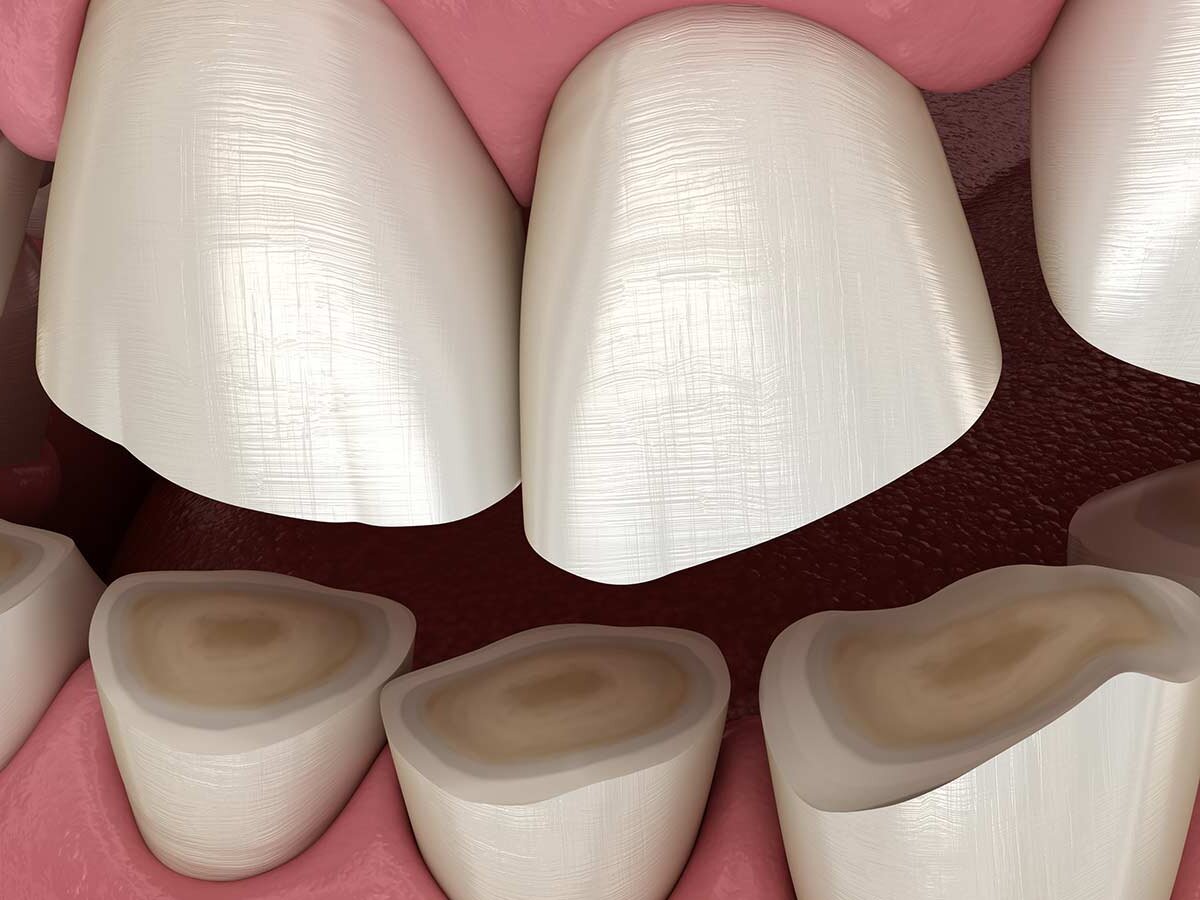
Tooth enamel erosion is one of the most overlooked dental problems, since it develops slowly and rarely causes pain in its early phase. The reasons and treatment of enamel erosion covered in this guide walk through why the enamel wears down, how to spot it early, and which treatments actually restore a damaged smile.
What Is Tooth Enamel, and Why Does It Erode?
Tooth enamel is the translucent, mineral-dense layer covering the crown of every tooth. Composed mostly of hydroxyapatite crystals, it ranks as the hardest tissue the human body produces, harder even than bone. Its job is singular: shielding the softer dentin and nerve tissue underneath from mechanical wear, temperature shifts, and chemical attack.
Despite that resilience, enamel has a vulnerability. It is mineral, not living tissue, which means it cannot regenerate the way skin or bone does. Acid exposure gradually dissolves its crystal structure in a process called demineralization. When demineralization outpaces the mouth’s natural repair mechanisms, primarily saliva’s ability to redeposit minerals, enamel erosion sets in.
This distinction matters for anyone researching enamel erosion treatment options. Prevention and early intervention carry far more weight than repair, because true regrowth of lost enamel is not possible with today’s dental science.
Enamel Erosion Symptoms and the Stages Patients Often Miss
Enamel erosion symptoms tend to develop gradually, which is part of what makes the condition easy to underestimate. The earliest signals are subtle, such as a fleeting tooth sensitivity to cold water or a slight change in how a tooth catches the light. By the time discomfort becomes constant, the erosion has usually progressed well past its opening stage.
The most frequently reported signs include the following:
- Sensitivity to hot, cold, sweet, or acidic foods and drinks
- A yellowing appearance as dentin becomes visible through thinning enamel
- Rounded, glassy, or dull tooth surfaces instead of the natural texture
- Small cracks, chips, or cupping on chewing surfaces
- Increased susceptibility to cavities in previously healthy teeth
Enamel Erosion Stages
Dentists generally describe erosion along a spectrum rather than as a single event, and recognizing where a tooth falls on that spectrum helps determine which enamel erosion treatment is realistic. The table below outlines how the condition typically advances, from the earliest softening of the surface to visible structural loss:
| Stage | What’s Happening | Typical Signs |
| Early or surface stage | Softening of the outermost enamel layer | Mild sensitivity, no visible change |
| Moderate stage | Surface texture changes, minor smoothing | Dull or glassy appearance, occasional sensitivity |
| Advanced stage | Enamel thins enough to expose dentin | Yellowing, noticeable sensitivity, rough edges |
| Severe stage | Enamel loss reaches deeper tooth structure | Cracking, chipping, visible shortening of teeth |
| Structural damage | Underlying dentin and pulp become vulnerable | Persistent pain, higher cavity and fracture risk |
Reaching a dentist during the early or moderate stage is what keeps treatment simple. Waiting until structural damage appears usually means restorative work rather than a conservative fix.
Causes of Enamel Erosion Most People Overlook
Causes of enamel erosion rarely trace back to a single habit. More often, several low-grade acid exposures combine over years, and the list below covers the contributors dentists see most often in practice.
- Acidic and sugary diets: soda, citrus fruit, wine, sports drinks, and vinegar-based foods lower the mouth’s pH directly, while sugary foods feed bacteria that produce their own acid byproducts.
- Genetics: enamel thickness and mineral density vary between individuals, and thinner enamel runs in some families regardless of diet or hygiene.
- Aging: decades of chewing, temperature changes, and minor acid exposure naturally thin enamel over a lifetime.
- Bruxism and nail biting: grinding your teeth or biting repetitively wears enamel down mechanically, even without any acid involved.
- Dry mouth, known as xerostomia: saliva neutralizes acid and redeposits minerals, so reduced saliva flow removes that buffer and lets acid linger longer on tooth surfaces.
- Medical conditions: gastroesophageal reflux disease (GERD) and eating disorders such as bulimia introduce stomach acid into the mouth, which is considerably more corrosive than dietary acid.
Enamel Erosion Treatment: What Dentists Actually Recommend
Because enamel cannot rebuild itself, enamel erosion treatment focuses on protecting what remains and restoring what has already been lost. The options below range from conservative fixes to full restorations, depending on how far the erosion has progressed.
Restorative Options for Visible Damage
For teeth with noticeable wear, dental fillings can address minor structural loss, particularly on chewing surfaces. When erosion has progressed further, dental veneers or crowns become the more durable solution, since veneers rebuild the visible front surface while crowns encase the entire tooth. At Smile Team Turkey, these restorative treatments are available for patients whose erosion has reached the point where cosmetic or structural correction is needed, and more information is available by visiting the website or reaching out directly.
Tooth Bonding for Cracked or Discolored Teeth
Tooth bonding applies a tooth colored resin directly to the damaged surface, sealing cracks or chips and correcting discoloration in a single visit. Because the resin also acts as a physical barrier, bonding offers a secondary benefit, since it slows further acid contact with the compromised area beneath.
Professional Monitoring
Routine dental visits remain the most reliable way to catch erosion in its early or moderate stage, when treatment is least invasive. A dentist can identify surface changes long before a patient notices sensitivity, which is often the difference between a fluoride-based intervention and a full restoration.
Can Enamel Erosion Be Reversed? Separating Remineralization From Restoration
This is where confusion tends to creep in. Can enamel erosion be reversed? Not in the sense of regrowing lost tooth structure, since once enamel has physically worn away, it is gone permanently. What can happen is remineralization: the earliest, softened stage of enamel, before actual structural loss occurs, can partially re-harden if acid exposure stops and minerals are reintroduced.
How to Restore Tooth Enamel Naturally, and Where Its Limits Lie
Restoring enamel naturally really means supporting remineralization rather than reversing visible damage. The approaches below have genuine dental backing for softened, not yet structurally lost, enamel.
- Fluoride toothpaste and professionally applied fluoride varnish help redeposit minerals into weakened enamel.
- Calcium-rich foods such as milk, cheese, and yogurt supply the raw minerals saliva uses for repair.
- Sugar-free gum stimulates saliva flow and speeds natural buffering of acid.
- Adequate hydration keeps saliva production steady throughout the day.
These measures work only on enamel that has softened but not yet been structurally lost. Once cracking, cupping, or visible thinning appears, professional enamel erosion treatment, rather than home remedies, becomes the appropriate path forward.
How to Stop Enamel Erosion Before It Progresses
Knowing how to stop enamel erosion comes down to reducing acid exposure and reinforcing the mouth’s natural defenses. The habits below are the ones dentists most often recommend to patients trying to slow the process.
- Brushing with a soft-bristled toothbrush and fluoride toothpaste, twice daily, supports enamel strength over time.
- Waiting roughly 30 minutes after eating or drinking anything acidic before brushing avoids scrubbing softened enamel.
- Rinsing with water after acidic foods or drinks helps neutralize residual acid.
- Drinking acidic or cold beverages through a straw limits direct contact with front teeth.
- Reducing the frequency of soda, citrus, and sugary snacks lowers overall acid load.
- Addressing bruxism, often with a night guard, removes a purely mechanical source of wear.
- Scheduling regular dental check-ups allows early-stage erosion to be caught before symptoms appear.
None of these steps undo existing damage, but together they slow the rate at which new erosion develops, which for a tissue that cannot regenerate is the most realistic form of protection available.
You can reach our previous article from https://smileteamturkey.com/blog/hyperdontia-causes-diagnosis-and-treatments/
Frequently Asked Questions About Enamel Erosion
Is enamel erosion the same as tooth decay?
No. Tooth decay results from bacterial acid attacking enamel and forming cavities, while erosion is a chemical process from acid exposure alone, without bacteria being the primary driver. The two can occur together, but their causes differ.
How quickly does enamel erosion progress?
The pace varies widely depending on diet, saliva flow, and underlying health conditions such as GERD. Some patients show measurable changes within a year of frequent acid exposure, while others develop erosion gradually over decades.
Does whitening toothpaste make enamel erosion worse?
Some whitening products contain mild abrasives or acids that can aggravate already softened enamel. Patients with diagnosed erosion are generally better served by fluoride-focused, low-abrasion toothpaste recommended by their dentist.
Can children develop enamel erosion?
Yes. Frequent consumption of juice, soda, or sports drinks, along with certain medical conditions, can cause erosion in children’s primary and permanent teeth alike, making early dietary habits worth monitoring.
Is sensitivity always a sign of enamel erosion?
Not necessarily. Sensitivity can also stem from gum recession, a cracked tooth, or recent dental work. A dental evaluation is the only reliable way to confirm erosion as the cause.