
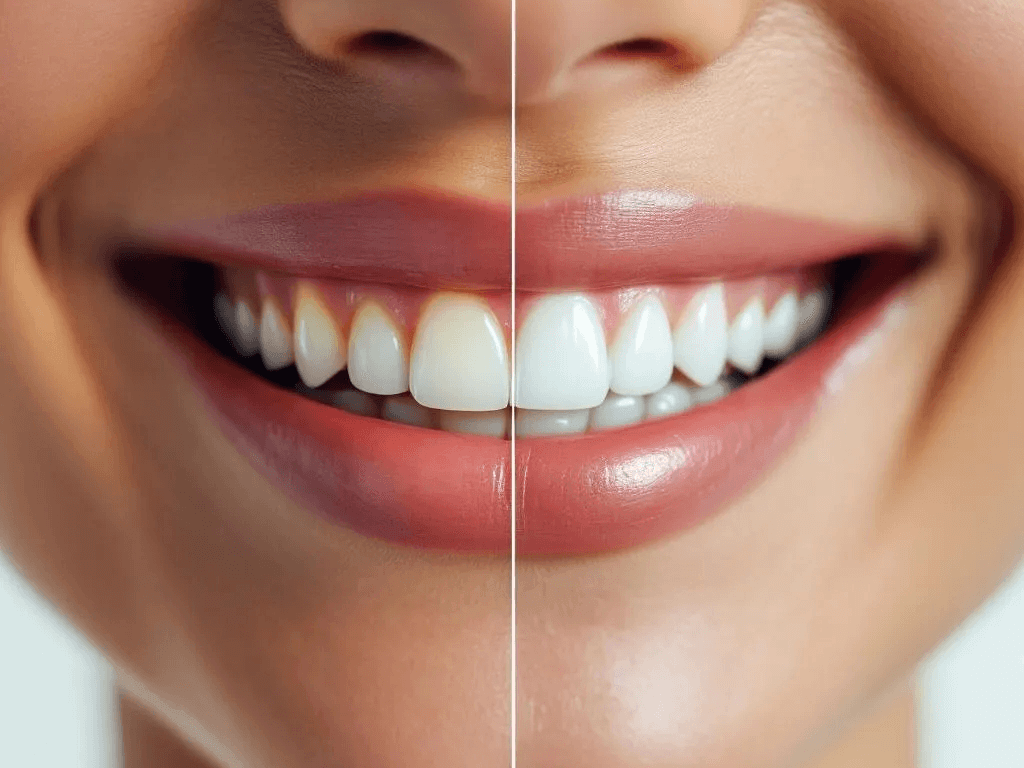
Healthy and natural teeth do not have to be flashy white. Actually, the healthy ones are no white ones. There is a wide scale of natural teeth color, ranging from various shades of white to yellow, gray, brown, and even blue. Tooth color naturally varies from person to person and is usually not very bright white. Our teeth are naturally of various colors and shades and there is nothing wrong with having teeth that are not pearl white. On the other hand, there’s nothing wrong with having whiter teeth either!
Natural teeth color can range from off-white to shades with hints of yellow, gray, brown, or even reddish brown and reddish yellow. Some people may have darker or dark spots on their teeth, which are not necessarily cavities but part of the natural variation. Healthy teeth are usually slightly translucent, and their color can also be affected by factors such as age, diet, oral hygiene, and genetics.
How come do we happen to have various teeth color, though?
It is actually the enamel that determines the color of your tooth. What is enamel? It is the outer covering of the tooth. As much as it is a very thin layer, it is the hardest tissue of the human body. The translucent enamel covers the crown, and the level of translucency and the color of the dentin beneath are what make how your teeth look on the surface. The natural color of teeth is primarily influenced by the thickness of enamel and the color of the underlying dentin, which are affected by genetics and age. The enamel thickness and translucency affect the final color of your teeth. Genetics determine the thickness and density of enamel and the shade of dentin; thicker enamel conceals yellow dentin more effectively. Aging leads to enamel wear, which allows the darker dentin to show through more clearly, resulting in a yellower appearance over time. Therefore, we can confidently say, it is mostly about the genetics that causes the final color of your teeth. The color of your teeth is not always a clear indicator of oral health.
A tooth shade guide is a diagnostic tool that helps dentists assess the natural color of teeth and plan treatments accordingly. The most commonly used tooth shade guide is the Vita Classical A1–D4 scale, which groups shades into four categories. For example, these categories include reddish brown and reddish yellow shades. Tooth shade guides help establish a starting point before whitening and monitor results throughout the process. Achieving the right color is key to a successful outcome in cosmetic dentistry treatments such as crowns and veneers, and the right shade for teeth should complement a person’s natural features, including skin tone and eye color.
However, your lifestyle, daily life habits and even some unconscious habits will contribute to your natural teeth color. For example, yellow teeth can result from staining rather than poor health, and a slight yellow tint could actually mean your teeth are strong and healthy. Let’s have a look at the most common causes.
Understanding Natural Colour
Understanding the natural colour of your teeth is an important step toward maintaining healthy teeth and achieving a smile you feel confident in. Many people are surprised to learn that natural tooth colour isn’t always a bright white—healthy teeth can range from pale white to light yellow or even grayish hues. This variation is completely normal and is influenced by a combination of genetics, lifestyle habits, and diet.
The outer layer of your teeth, called enamel, is semi-translucent and plays a major role in your tooth shade. Beneath the enamel lies the dentin, which is naturally more yellow. As we age, the enamel can gradually wear down, making the yellowish dentin more visible and causing teeth to appear more yellow. This process is natural and doesn’t necessarily indicate poor oral health.
Lifestyle habits and dietary choices also have a significant impact on the natural colour of your teeth. Common causes of discoloration include frequent consumption of coffee, tea, red wine, and certain foods and drinks that can leave stains on the enamel. Smoking and poor oral hygiene can further contribute to stains and a duller appearance. Additionally, some medications and too much fluoride can affect tooth colour, making it even more important to consult with a dentist regularly to determine the best approach for your oral health.
Maintaining a healthy, beautiful smile is about more than just achieving a bright white shade. Regular brushing and flossing, combined with a balanced diet and professional dental care, help prevent stains and keep your teeth looking their best. If you’re considering teeth whitening, it’s wise to seek professional advice to ensure the treatment is safe and effective for your current tooth colour and enamel condition. Overusing whitening toothpaste or fluoride can actually damage the enamel, so following your dentist’s recommendations is key.
When it comes to choosing your ideal tooth shade, remember that everyone’s natural colour is unique. Some people may prefer a brighter, whiter smile, while others are happy with a more subtle, natural look. The best tooth shade is one that complements your skin tone, eye colour, and overall appearance. Your dentist can help you determine the most flattering and healthy option for you.
Ultimately, understanding your natural tooth colour and taking steps to maintain good oral hygiene will help you achieve a smile that’s both healthy and beautiful. By focusing on the health of your teeth and gums, avoiding common causes of discoloration, and seeking professional guidance when needed, you can enjoy a radiant smile that reflects your unique personality and makes you feel confident every day.
Common Causes for Teeth Discoloration
For instance, if your teeth are darker than the color range that is considered natural, it can be resulting from heavy smoking, coffee, or beverages with acid. These habits can cause teeth to become darker than the natural color range. You might consider cutting down on the number of cigarettes you smoke per day or use a straw to drink soda. Drinking plenty of water, especially when you are consuming staining foods and drinks, is also a good idea. One more thing about diets is that snacks between meals will cause your mouth to be continuously full of acids, which can be dangerous if they are left to build up. If you avoid snacks in between, it will allow the saliva to dilute the acids in your mouth.
Apart from these lifestyle habits, there are other factors that might cause the enamel to get thinner, which will eventually lead to discoloration. Certain medications, medical conditions, and poor dietary choices can all influence tooth color and contribute to discoloration. For example, certain medications such as tetracycline can lead to permanent internal discoloration of teeth.
Let’s go over with your daily brushing habits: Are you applying too much pressure while brushing your teeth? Does your toothbrush have bristles that are too firm? These can gradually weaken your enamel. A weakened enamel will show the colored dentin body more, and affect your natural teeth color.
Teeth grinding, or bruxism is a nasty habit that continuously damages the enamel. If you do not take the necessary measures to cure or stop this condition, eventually it will wear out your enamel. Using nightguards are also a good start to take care of this unconscious yet extremely damaging habit.
Let’s not go without mentioning the bottom-line rule once again: Proper daily oral care routines! Proper brushing and flossing will also help with maintaining your teeth color. Dental products with fluoride are strongly recommended by our specialists as well. They are effective in protecting your teeth.
Life-Long Precautions to Maintain Your Natural Teeth Color
In the end, your long-term results will heavily depend on your lifestyle habits, the staining foods you eat, and the oral care routines. You could, like many others, find it impossible to completely eliminate tea, coffee, cola, red wine, and other stain-causing food or drinks from your diet. In such a case, you could actually need professional oral care periodically.
If you are perfectly following the above directions, and brushing twice a day and flossing properly, then you can consider your mouth healthy. It won’t really matter if your teeth are pearl white or not. However, you might still desire to reach your own maximum “whiteness”.
No problem, the main point here is to preserve your natural teeth color while changing a few shades in your individual color range. According to your oral condition and the treatment you prefer, one of the teeth whitening systems can fix that. Professional whitening treatments can effectively target both surface and deeper stains on teeth, and are often guided by a professional tooth shade guide to achieve optimal results. Professional shade matching is recommended over at-home assessments due to factors like ambient lighting and screen color rendering, ensuring a more accurate result. Digital shade-matching devices are increasingly popular and help reduce human error in shade assessment. Tooth shade guides ensure uniformity across all restorations, which is especially important for visible front teeth. There are so many ways to treat discolored teeth at our clinic.
What to do for a Whiter Smile?
Teeth whitening is such an effortless treatment, but it makes a noticeable difference in your natural teeth color and smile. There are several ways to achieve it. Some patients could want a dramatic change with their teeth color, while others may prefer a gradual change with mostly at-home method like using a whitening toothpaste or other relevant substances. Still, your natural teeth color, the depth of your stains or discoloration, and the method you prefer will majorly contribute to the final look.
Our patients have decided to go for the professional way of doing it, in order to reduce the time and effort, while also ensuring a satisfactory result. Our dental clinic provides professional whitening with world-class laser equipment. Professional whitening treatments can effectively target both surface and deeper stains on teeth, and can significantly brighten teeth, but natural enamel limitations apply. In such a short time and a pain-free way, this very basic procedure can become part of your smile makeover. Professional interventions, such as whitening or veneers, offer more significant solutions for deep-set or intrinsic stains.
In case you are not a good fit for teeth whitening procedures due to your oral condition, we offer other options. Bonding or full set of veneers are common solutions for patients with such a handicap. Using a trusted cosmetic dentist and a reliable tooth shade guide makes a seamless match possible for crowns and veneers, and when dental restorations blend perfectly with your existing teeth, the results are indistinguishable.
Moreover, Smile Team Turkey offers a vast variety of dental treatments for the perfect and durable smile makeover. We have successfully treated numerous patients for dental implants including all-on-4 and all-on-6, dental veneers, and dental crowns.
Still having questions about natural teeth color or more? Contact us for more information and professional opinions from our reputable specialists.
You can read our previous post on https://smileteamturkey.com/blog/why-should-you-prefer-dental-tourism/