
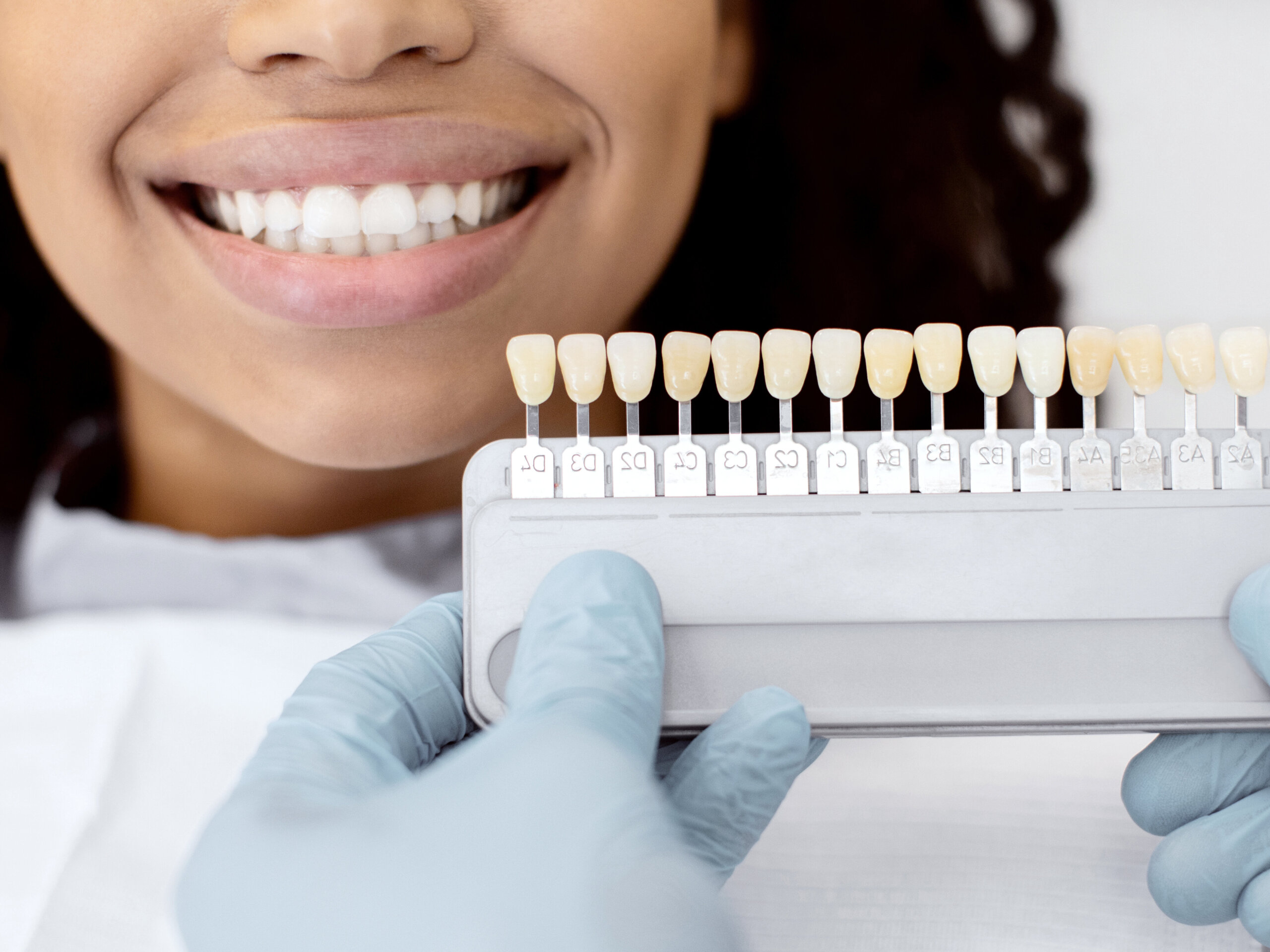
Choosing between laminate veneers vs. porcelain veneers shapes the result of almost every modern smile makeover, yet many patients treat the two as identical. The sections that follow set out what each type of shell is, how tooth preparation and stain resistance differ between them, where the treatments quietly overlap, how many years they tend to last, and which situations suit one option over the other.
What Is a Laminate Veneer?
A laminate veneer is an ultra-thin shell, frequently crafted from porcelain, that covers only the visible front surface of a tooth. Its defining quality is minimal intervention, because the shell is so slender that the dentist removes little or no natural enamel before bonding it into place. The finished result is a bright, even surface that conceals discoloration, minor chips, and small gaps while preserving most of the underlying tooth structure.
Many patients favor laminate veneers precisely because the approach can be conservative and, in certain no-prep cases, reversible. The bond remains durable enough for years of ordinary use, provided oral hygiene stays consistent and dental visits continue on schedule. Anyone weighing this route can review the treatment details for laminate veneers in Turkey to understand candidacy, planning steps, and the results that are realistic for their teeth.
What Are Porcelain Veneers?
Porcelain veneers, sometimes described as conventional veneers, are custom shells bonded to the front of each tooth to reshape and brighten the smile. They tend to be marginally thicker than ultra-thin laminates, which allows them to mask deeper stains and more pronounced irregularities. Preparing a tooth for a conventional porcelain veneer usually involves removing a slender layer of enamel, often around half a millimeter, so the restoration sits flush and natural against neighboring teeth, according to the Cleveland Clinic’s veneer overview.
Porcelain earns its reputation through optical realism and resilience. The material reflects light much like natural enamel and resists the staining that troubles coffee, tea, and red wine drinkers. Each veneer is fabricated individually in shade, contour, and length, then verified for fit before final bonding, which gives the dentist precise control over how the completed smile reads.
Laminate Veneers vs. Porcelain Veneers: The Core Differences
Although the two share porcelain as a common material, laminate veneers vs. porcelain veneers is ultimately a question of thickness, tooth preparation, and the severity of the flaws being corrected. Ultra-thin laminates preserve enamel and suit subtle corrections, while conventional porcelain veneers accommodate bolder transformations. The table below distills the practical distinctions that most influence a patient’s decision.
| Thickness | Ultra-thin shell | Slightly thicker for fuller coverage |
| Enamel removal | Minimal to none, sometimes fully no-prep | A thin layer removed before bonding |
| Reversibility | Often reversible in no-prep cases | Generally considered irreversible |
| Best suited for | Mild discoloration, minor gaps and chips | Deeper stains, reshaping, more visible corrections |
| Stain resistance | High | High |
| If damaged | Individual shell replaced | Fractured veneer usually replaced in full |
| Cost consideration | Typically lower per tooth | Often higher due to added preparation and lab work |
Where the Two Treatments Overlap
For all their differences, laminate and porcelain veneers travel a remarkably similar road. Both are cosmetic restorations rather than treatments for structural disease, both are custom-built for the individual, and both reward diligent care with years of dependable service. The shared characteristics below define teeth laminates vs veneers at the practical level.
- Aesthetic purpose: both conceal discoloration, chips, gaps, and mild misalignment rather than repairing decay.
- Custom fabrication: each shell is matched to the patient’s shade, size, and shape.
- Bonding process: both are cemented to the front surface after careful preparation and fitting.
- Maintenance demands: brushing, flossing, and routine dental visits protect either option.
- Confidence restored: both return an even, natural-looking smile to patients unhappy with their teeth.
Longevity and Everyday Durability
Durability is where evidence, rather than marketing, deserves attention. Porcelain laminate veneers are engineered for extended service, and clinical data supports that promise. A systematic review of porcelain laminate veneers reported a ten-year cumulative survival rate of 95.5 percent, a figure that reflects careful placement and consistent aftercare. The Cleveland Clinic similarly places the typical lifespan of dental veneers at ten to fifteen years with proper maintenance.
Minimal-preparation approaches perform comparably well. A prospective study following patients for roughly nine years found that no-prep and minimally invasive veneers matched, and slightly exceeded, the survival of conventional veneers. Longevity, in other words, depends less on the label and more on daily habits. The factors below shape how long laminate teeth restorations endure:
- Consistent oral hygiene, including twice-daily brushing and regular flossing.
- Biannual professional check-ups that catch small problems early.
- Protection against grinding, often with a night guard for patients who experience bruxism.
- Moderation with very hard foods that stress the bonded edge.
- Prompt attention to any chip, since a fractured porcelain shell typically needs full replacement.
Selecting the Right Veneer for Your Smile
The decision rarely comes down to material alone. It reflects the condition of the natural teeth, the scale of the desired change, and long-term priorities around enamel preservation and budget. A candid consultation, in which a dentist assesses enamel thickness, bite, and shade goals, settles most of the uncertainty. The considerations below tend to guide the choice.
- Extent of correction: subtle refinements lean toward laminates, while dramatic makeovers favor conventional porcelain.
- Enamel preservation: patients keen to keep natural tooth structure often prefer minimal-prep laminates.
- Staining habits: heavy coffee, tea, or wine consumption pairs well with porcelain’s stain resistance.
- Budget: weighing porcelain laminate veneers cost against conventional options helps set expectations, and treatment abroad can widen the range.
- Aftercare commitment: both options depend on the same disciplined daily routine.
Whichever path appeals, the outcome hinges on upkeep as much as craftsmanship. Guidance on caring for veneers helps preserve the finish for years, and patients researching affordability can compare options for veneers in Turkey before committing.
You can read our previous article at https://smileteamturkey.com/blog/why-are-your-teeth-yellow-when-you-brush-them-every-day/
Making Laminate Veneers vs. Porcelain Veneers Work for You
The contrast between laminate veneers vs. porcelain veneers is less a rivalry than a spectrum of refinement. Ultra-thin laminates reward patients who value enamel preservation and subtle enhancement, while conventional porcelain veneers deliver the coverage and strength that bolder corrections demand. Both draw on the same aesthetic principles, both resist staining admirably, and both reward attentive care with a smile that reads as entirely natural. The wiser question is not which treatment is universally superior, but which aligns with an individual’s teeth, habits, and expectations, a point that a thorough consultation with an experienced clinician settles with confidence.
Frequently Asked Questions About Laminate Veneers vs. Porcelain Veneers
Do laminate veneers hurt during placement?
The procedure is generally comfortable, since minimal enamel is disturbed and local anesthetic is available whenever any preparation is needed. Most patients report only mild, short-lived sensitivity after bonding, which usually settles within a few days.
Can veneers be whitened later if they discolor?
Porcelain does not respond to whitening agents the way natural enamel does, so a veneer’s shade is essentially fixed at the moment of fabrication. Patients who anticipate wanting a brighter smile therefore select the final shade carefully during the planning stage.
Are veneers suitable for crooked or crowded teeth?
Mild crowding or slight rotation can often be camouflaged with veneers, creating the impression of straighter teeth without braces. Significant misalignment is better addressed with orthodontics first, and a clinician can determine which situation applies after an examination.
How many dental visits do veneers require?
A typical course involves at least two or three appointments: an initial consultation with preparation, followed by fitting and bonding once the custom shells return from the laboratory. Additional visits are sometimes scheduled for shade adjustments or a trial fitting.
What happens to the tooth beneath a veneer over time?
When enamel removal is minimal and hygiene stays consistent, the underlying tooth remains healthy beneath a well-fitted veneer. Routine check-ups allow the dentist to monitor the margins and confirm that the bond stays sound over the years.