
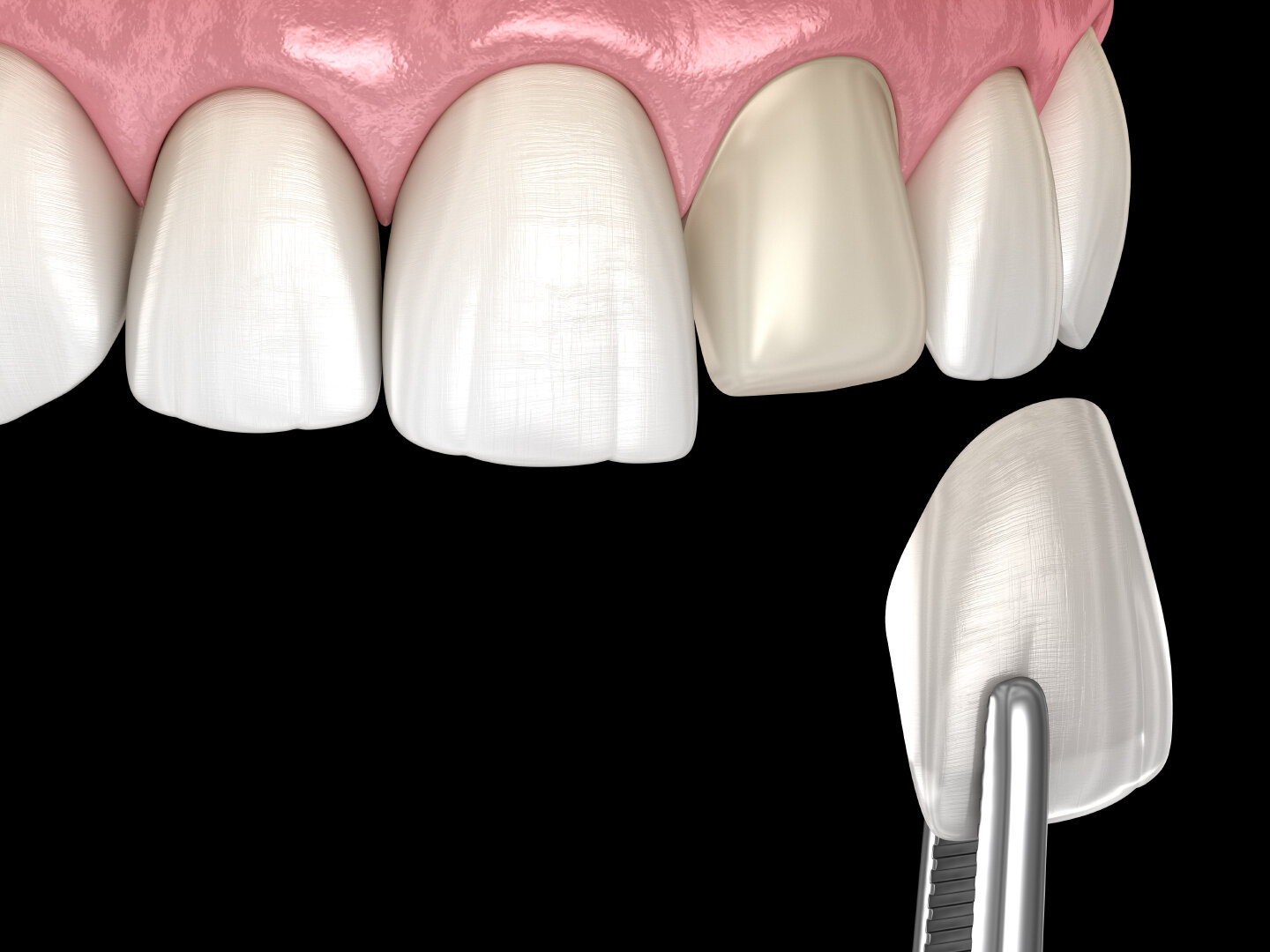
Veneer teeth shaving often sounds far more drastic than it actually is, and many patients delay getting veneers simply because of that fear. This guide walks through what the procedure really involves, how much enamel gets removed, how dentists decide the right amount for each tooth, whether the process hurts, and which alternatives exist for anyone hoping to avoid tooth preparation altogether.
What Is Veneer Teeth Shaving?
Veneer teeth shaving, also called tooth preparation, is the step where a dentist removes a thin layer of enamel from the front surface of a tooth before bonding a veneer to it. The goal isn’t to weaken the tooth; it’s to create enough room for the veneer to sit flush against the surrounding teeth instead of looking bulky or protruding.
Enamel is the hardest substance in the human body, but it has no nerve endings of its own, which is part of why this preparation is typically far less uncomfortable than patients expect. The dentist works only on the outermost layer, well above the dentin and pulp where sensation and nerve tissue reside.
A smile makeover with dental veneers is possible. These small covers are put over your natural teeth to hide stains, discolouration, chips, and other cosmetic flaws. With good maintenance, porcelain veneers can last up to 20 years, while composite veneers tend to have a shorter service life. Composite resin and porcelain are the two materials most frequently used to create veneers.
Your veneers are expertly created to precisely match the teeth’s size, shape, and colour on each side. Each veneer is permanently bonded to the corresponding tooth for a secure fit.
Do You Need Veneers?
Consider these questions if you’re thinking of getting veneers:
- Do you have cosmetic problems with your teeth that whitening won’t be able to fix?
- Are you trying to develop a smile that is brighter and more luminous? (If not, you may want to think about crowns instead of veneers.)
- Do your teeth have minor chips, gaps, or uneven edges rather than structural damage?
- Are your teeth otherwise healthy, with no active decay or gum disease that needs treatment first?
You would be a suitable candidate for veneers if you indicated yes to all the questions above. You shouldn’t be discouraged by veneer teeth shaving because it is a quick and straightforward preparation phase; be sure to work with a skilled cosmetic dentist.
Veneer Teeth Shaving: What Actually Happens
Standard porcelain and composite veneers typically require some veneer teeth shaving to ensure that the veneer melds seamlessly with the neighbouring teeth. Without filing the tooth, the veneer may stand out and appear unnatural or asymmetrical if it is glued to the front of the tooth. The dentist can guarantee that the veneer blends in naturally with the neighbouring teeth by lightly filing the front of the tooth.
Only the tooth’s front has been filed down. The fast veneer teeth shaving procedure is often completed during the initial appointment before the veneers are permanently bonded to the teeth. Various choices are available for those who do not want to prepare their teeth for veneers.
How Dentists Decide How Much to Remove
The exact amount of enamel a dentist removes depends on several factors that are assessed during the consultation:
- The current thickness and health of the enamel
- How much the tooth needs to be reshaped to look natural next to its neighbours
- Whether the patient has any misalignment that the veneer needs to visually correct
- The type of veneer material chosen, since some materials are thinner than others
This is one reason a thorough consultation and diagnostic scan should always come before any shaving takes place, rather than the dentist estimating on the day of treatment.
What Happens to Teeth Under Veneers?
Once a tooth has been prepared and a veneer bonded to it, the natural tooth remains underneath, doing the same structural work it always did: supporting bite pressure, anchoring to the jawbone, and housing the nerve. The veneer becomes a protective, cosmetic shell over that structure rather than a replacement for it.
Because a thin layer of enamel has been removed, the tooth typically needs a veneer (or another restoration) permanently in place going forward; that section of enamel doesn’t grow back. This is a normal and expected part of committing to veneers, similar to how a crown permanently changes the tooth it covers. It’s also why choosing an experienced cosmetic dentist matters, since conservative shaving preserves as much of the natural tooth as possible.
Underneath a well-fitted veneer, the tooth continues to respond normally to brushing, flossing, and routine dental exams. Sensitivity, if any, tends to be temporary and related to the amount of enamel removed rather than to the veneer itself.
Be Cautious When Shaving Teeth
Particularly in relation to influencer culture, the so-called “shark teeth phenomenon” has received a lot of attention. Some young individuals are shaving their teeth practically to the nubs to enable radical cosmetic procedures in their pursuit of perfect beauty.
The issue typically arises when someone chooses to have a complete set of dental crowns, a dramatic procedure that is rarely necessary. Veneer preparation is far less intrusive and complicated.
True, dentists used subpar equipment and materials in earlier decades. This meant that before placing veneers, removing a significant amount of enamel from the teeth, meaning veneer teeth shaving, was frequently required. Dentists may produce better results with a much lighter touch, thanks to substantial technological advancements.
It’s crucial to choose a professional cosmetic dentist skilled in using delicate shaving methods for veneer teeth that protect your natural teeth. Every patient’s circumstance is different, but for traditional porcelain veneers, dentists typically remove around 0.5 millimetres of enamel, which is roughly the thickness of a fingernail. Our dentists at Smile Team will do an examination and inform you of what to anticipate.
Warning Signs of Over-Aggressive Shaving
Patients researching clinics may want to be cautious if any of the following come up during a consultation:
- A dentist who proposes shaving down healthy teeth without first checking if crowns are actually necessary
- No diagnostic imaging or digital smile design before the shaving is scheduled
- Pressure to prepare more teeth than the cosmetic concern requires
- No clear explanation of how much enamel will be removed, in millimetres
Does Having Your Teeth Shaved Hurt?
The discomfort of veneer teeth shaving is typically fairly minor. The dentist removes only a small layer of surface enamel, so the procedure can even be finished without anaesthetic. The dentist may occasionally employ an inhalation sedative or local anaesthetic to ensure the greatest comfort level.
Any discomfort you’re experiencing should be discussed with your dentist, who may be able to make accommodations for you. You can have some minor pain when the process of veneer teeth shaving is finished. Most of the time, painkillers can be used to relieve the discomfort, and this discomfort ought to pass after a few days.
Mild sensitivity to hot or cold foods in the days following the appointment is also common and generally temporary, since the enamel layer that once buffered these sensations has been thinned. This typically settles down once the permanent veneer is bonded in place, since the veneer itself acts as a new protective layer.
Is It Possible to Avoid Having Your Teeth Shaved?
If you desire veneers but are still uncomfortable having your teeth shaved, there are other solutions. In most situations, no-prep veneers can be bonded over natural teeth without the requirement for filing. Perhaps the most well-known type of no-prep veneer is called Lumineers.
They are less noticeable when compared to natural teeth since they are thinner than traditional porcelain veneers. Their durability is often assumed to be lower simply because the shells are so thin, though the data doesn’t fully support that assumption; a nine-year clinical study comparing the two approaches found that no-prep veneers actually had a higher survival rate than conventional prepared veneers, with a mean success time of just over ten years compared with roughly nine years for the traditional, prepared type.
No-prep veneers are not appropriate for everyone, and these delicate coatings need a particular mouth shape and exceptionally strong teeth. Make sure you work with a professional cosmetic dentist who has experience with these procedures if you decide to get Lumineers or another type of no-prep veneer. Lumineers’ thin, delicate construction necessitates a very high level of skill.
Who Tends to Be a Good Candidate for No-Prep Veneers?
Not every smile is suited to a no-prep approach. Dentists generally look for:
- Teeth that are already fairly well-aligned, with no significant crowding or protrusion
- Enough existing tooth surface for a thin shell to bond securely
- A cosmetic concern limited to colour, minor gaps, or slight shape irregularities
- A patient comfortable with a thinner shell that depends on strong existing enamel for its bond, rather than mechanical retention from a prepared surface
Patients whose teeth are more visibly misaligned, worn down, or already heavily restored are usually better served by traditional prepared veneers, since a no-prep shell has very little room to disguise those issues.
Veneers Without Shaving Teeth: Cost Considerations
Cost is often the deciding factor once patients understand the trade-offs. No-prep veneers and traditional prepared veneers are priced differently depending on the clinic, the material, and the number of teeth involved, and pricing also varies significantly between countries. Because no-prep veneers use thinner, more specialised material and demand a higher level of precision to fit without any tooth reduction, they aren’t always the cheaper option, even though the procedure itself involves less work on the tooth.
Anyone comparing veneers without shaving teeth cost against traditional veneer cost should request a written quote after a consultation, since the right choice depends on the number of teeth being treated, the material selected, and the current condition of the enamel, rather than on a flat, one-size-fits-all price.
Traditional Veneers vs. No-Prep Veneers: A Quick Comparison
Choosing between traditional, prepared veneers and no-prep options like Lumineers usually comes down to weighing longevity against reversibility. The table below summarises how the two approaches generally compare, though a dentist’s assessment of the individual tooth always takes priority over general guidelines.
| Factor | Traditional Veneers (Shaved) | No-Prep Veneers (e.g., Lumineers) |
| Enamel removed | Thin layer, roughly up to 0.5mm | Little to none |
| Typical lifespan | Up to 20 years with good care | Comparable to traditional veneers, and even higher in some clinical follow-up studies |
| Reversibility | Not reversible once prepared | More reversible, since little to no enamel is removed |
| Best suited for | Teeth needing more visual correction | Well-aligned teeth with minor cosmetic concerns |
| Appearance thickness | Slightly thicker, blends via shaping | Very thin, can look more natural on suitable teeth |
Lastly, remember that while the discomfort is small and only brief, a high-quality veneer can make your smile more radiant for years to come.
If you’d like to compare your options further, you can read our previous article on composite veneers.
Frequently Asked Questions About Veneer Teeth Shaving
Can you get veneers without shaving teeth at all?
Yes, in select cases. No-prep options like Lumineers can sometimes be bonded with little to no enamel removal, but this depends on how well-aligned and evenly sized the existing teeth already are.
How should you care for your teeth right after veneer teeth shaving?
Gentle brushing, avoiding very hot, cold, or hard foods until the permanent veneers are bonded, and following any temporary veneer instructions from your dentist all help protect the freshly prepared teeth.
How long does veneer teeth shaving take per tooth?
Preparation is usually quick, often just a few minutes per tooth, and is typically completed in the same appointment as taking impressions for the permanent veneers.
Will my shaved teeth look strange before the permanent veneers are placed?
Temporary veneers are usually fitted immediately after shaving to protect the prepared teeth and maintain a natural appearance until the permanent set is ready.
Do shaved teeth under veneers still get cavities?
Yes, the natural tooth beneath a veneer can still develop decay at the margins if oral hygiene is neglected, which is why regular brushing, flossing, and dental checkups remain essential after treatment.
Does insurance ever cover veneer teeth shaving?
Because veneers are usually classified as a cosmetic procedure, the preparation and placement are typically not covered by dental insurance, though it’s worth confirming directly with a provider.