
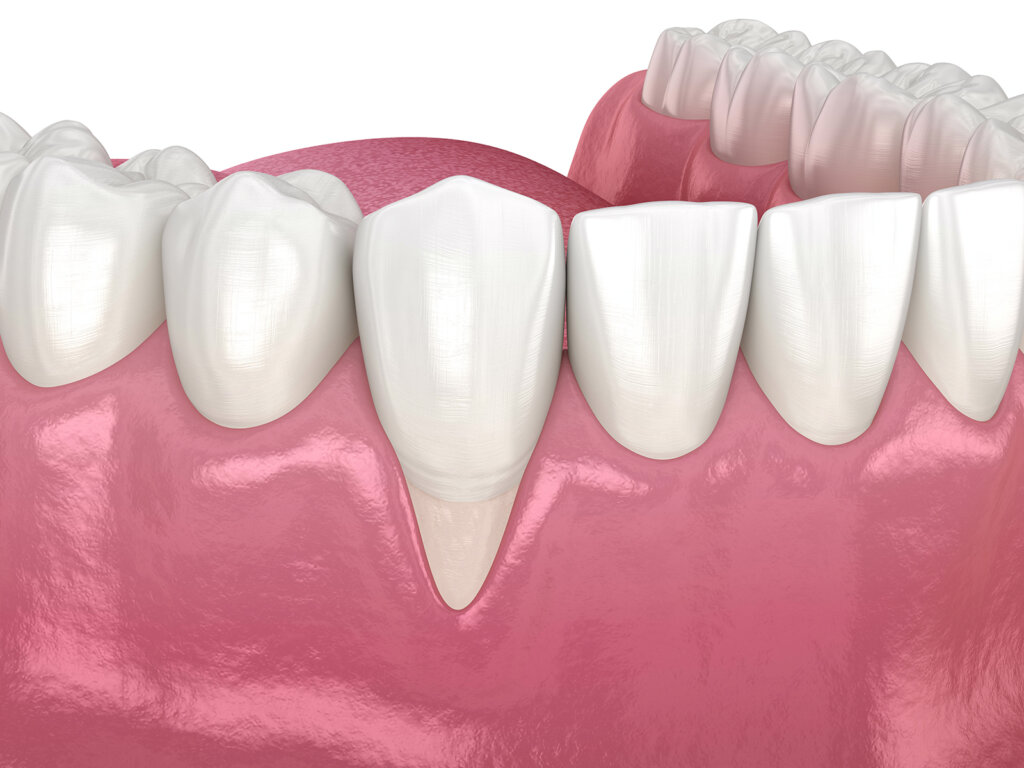
A shrinking gumline rarely announces itself, which is why many people overlook the early signs until sensitivity or visible root exposure sets in. This article covers gum recession symptoms and treatment in detail, starting with the earliest warning signs and underlying causes, moving through the stages dentists use for diagnosis, and ending with whether recession can be reversed and which professional treatments protect the gumline over the long term.
What Is Gum Recession, and Why Does It Happen?
Gum recession is the gradual pulling away of gum tissue from the surface of a tooth, exposing more of the tooth structure, including the root. As the gumline retreats, small pockets open between the tooth and the tissue that once protected it. Bacteria find these pockets easy to colonize, which is why untreated recession so often develops into periodontal disease and, later, tooth decay near the root surface.
The exposed root itself carries no enamel, the hard outer layer that shields the crown of a tooth. Its surface is softer and considerably more vulnerable to erosion, sensitivity, and bacterial invasion. In advanced cases, the supporting bone beneath the gum line begins to break down as well, a development that raises the risk of tooth mobility and, eventually, tooth loss.
Recession unfolds slowly, often across years rather than months. That pace is precisely what makes it easy to overlook: the difference between one month and the next is negligible, while the difference between one year and the next can be considerable.
Gum Recession Symptoms: Early Warning Signs to Notice
The signs of gum recession tend to appear gradually and are frequently mistaken for ordinary sensitivity or mild irritation. A tooth that suddenly reacts to cold air, ice cream, or brushing is often the first clue that gum tissue has started to withdraw.
The most common indicators, in order of how often patients report noticing them, include the following:
- Teeth that appear longer than they used to, particularly along the gumline
- A visible notch or step where the tooth meets the gum
- Sharp sensitivity to cold, heat, or sweet foods
- Gums that look red, swollen, or bleed during brushing and flossing
- Persistent bad breath despite regular brushing
- A rough or uneven feeling when the tongue passes along the gumline
Early Gum Recession vs. Mild Gum Recession
The terms “early” and “mild” gum recession are often used interchangeably, though they describe slightly different ideas. Early gum recession refers to the timing, meaning recession caught at its onset, sometimes before a person notices any discomfort at all, usually during a professional periodontal exam. Mild gum recession, by contrast, refers to severity: a small amount of root exposure, generally under three millimeters, regardless of how long it has been present.
A tooth can therefore show mild recession that has, in fact, been developing for years, just as a tooth can show early-stage recession that is already more than mild in degree. This distinction matters because early detection, regardless of severity, is what allows a dentist to intervene before the condition progresses toward more invasive treatment.
The Stages of Gum Recession
Dental professionals typically describe gum recession according to how much root surface has become visible, measured in millimeters. This staging, summarized in the table below, helps determine whether root planing, deep cleaning, or surgical grafting is the more appropriate path forward.
| Stage | Root Exposure | Typical Characteristics |
| Mild | Up to 3 mm | Slight sensitivity; often unnoticed without a dental exam |
| Moderate | 3–4 mm | Visible root surface; noticeable sensitivity; some notching |
| Advanced | Over 4 mm | Significant root exposure; higher risk of decay, mobility, and bone loss |
A review published in the Journal of the American Dental Association found that roughly 88 percent of adults aged 65 and older, and about 50 percent of adults between 18 and 64, have at least one site with measurable recession, which places it among the more common, if underdiscussed, dental conditions across adulthood.
Newer population data paints an even broader picture: a 2025 systematic review and meta-analysis estimated the prevalence of gingival recession at 81.1 percent for recession of at least 1 mm, narrowing to 16.2 percent once the threshold rises to 5 mm or more. The gap between those two figures says something important: most adults will develop some degree of gum recession eventually, but only a smaller fraction will let it advance far enough to threaten a tooth.
What Causes Gum Recession?
There is no single trigger behind gum recession. Instead, it tends to result from a combination of mechanical habits, biological predisposition, and underlying oral disease acting together over time.
Genetic and Anatomical Risk Factors
Some people are simply born with a thinner band of gum tissue, a trait known as a thin gingival biotype, which offers less of a buffer against everyday wear. Tooth position plays a role too, since teeth that sit slightly outside the normal dental arch often have thinner bone and tissue covering them, leaving them more exposed to recession than well-aligned teeth. A short or tight frenum, the small band of tissue connecting the lip or tongue to the gum, can likewise pull on the gumline and accelerate the process.
Everyday Habits That Push Gums Back
Physical wear from brushing is one of the most frequent, and most preventable, causes of recession, alongside a handful of other habits and mechanical factors that affect the tissue in a similar way:
- Brushing with a hard-bristled brush or excessive pressure
- Using an aggressive side-to-side brushing motion rather than gentle, circular strokes
- Lip or tongue piercings that rub against the gum tissue
- Poorly fitted dentures, retainers, or other prosthetics
- Teeth grinding or clenching, which places abnormal force on the gumline
- Tobacco use, which restricts blood flow to gum tissue
Interestingly, right-handed brushing habits tend to place more pressure on the left side of the mouth, which is one reason recession often appears more pronounced there. Periodontal disease compounds all of these mechanical factors, since chronic inflammation from plaque and tartar buildup gradually breaks down the tissue and bone that anchor the gum in place.
Certain medications add another layer of risk. Blood pressure drugs, some antidepressants, and long-term antibiotic use have all been associated with softer, more vulnerable oral tissue in some patients, though a change in medication is a decision that belongs to a physician rather than something to pursue independently.
Is Gum Recession Reversible?
This is the question most patients ask first, and the honest answer sits somewhere between yes and no. The gum tissue itself does not grow back on its own once it has receded, since gingival tissue, unlike skin, has limited capacity for spontaneous regeneration. In that sense, recession is not reversible through home care alone.
What can happen is a slowing or complete halt of further recession once the underlying cause is addressed, along with a restoration of the tissue’s appearance and function through professional treatment. Gum grafting, discussed below, is currently the most reliable method for physically covering exposed roots and restoring the gumline’s original position. For milder cases, some dentists also use minimally invasive techniques, such as the pinhole surgical technique, to reposition existing tissue over the exposed root without a graft.
The takeaway worth remembering: recession will not correct itself through brushing changes or oral rinses alone, but it also does not have to keep worsening. Early intervention is what separates a manageable condition from one that eventually threatens a tooth.
Gum Recession Treatment Options
Treatment for gum recession is chosen according to its stage, its underlying cause, and whether it has already begun affecting the health of the tooth or supporting bone. Gum recession sits within the broader range of dental treatments aimed at protecting both the appearance and the long-term function of a smile.
Non-Surgical Gum Recession Treatment
For recession linked to plaque and tartar buildup, scaling and root planing is often the starting point. This deep-cleaning procedure removes bacterial deposits from above and below the gumline, then smooths the root surface so gum tissue can reattach more securely against the tooth. A local anesthetic is commonly used, and the process may be spread across more than one appointment depending on how many areas need treatment.
When recession stems from a brushing technique or an unsuitable toothbrush, a dentist typically demonstrates a gentler method and recommends a soft-bristled alternative. Ill-fitting dentures or retainers are adjusted or replaced with versions shaped to the mouth’s actual anatomy, removing the source of ongoing friction.
Gum Recession Surgery
Once recession has progressed beyond what non-surgical care can resolve, gum recession surgery, most often in the form of a gum graft, becomes the standard recommendation. A small section of tissue, usually taken from the roof of the mouth or from a donor source, is placed over the area of exposed root. Over the following weeks, the grafted tissue integrates with the surrounding gum and gradually restores a natural gumline contour.
Beyond restoring appearance, a successful graft re-establishes a physical barrier over the root surface, which meaningfully lowers the risk of further decay, sensitivity, and bone loss in that area. Recovery generally involves a period of soft foods and gentle oral care while the graft site heals.
Is Gum Recession Normal, and How Can It Be Prevented?
Given how widespread gum recession is across the adult population, a fair question follows: is gum recession normal, or is it always a sign that something has gone wrong? The honest answer is that mild recession becomes increasingly common with age and is not automatically a marker of disease. Its progression, however, is not something to treat as inevitable or harmless, particularly once sensitivity, visible root exposure, or bleeding appears.
Prevention centers on removing the mechanical and biological triggers described earlier, and the following habits form the core of most dentists’ recommendations:
- A soft-bristled toothbrush paired with gentle, circular motion rather than aggressive scrubbing
- Routine professional cleanings to keep plaque and tartar from accumulating along the gumline
- Prompt attention to any ill-fitting dental prosthetic
- Reduced or eliminated tobacco use
- A properly fitted mouthguard for anyone who grinds their teeth at night
Regular dental visits remain the most dependable safeguard, since a dentist can often detect the earliest signs of recession well before a patient notices anything unusual. People who are concerned about their teeth or receding gums can schedule an appointment with Smile Team Turkey.
You can read our previous article from https://smileteamturkey.com/blog/between-acid-reflux-and-teeth/.
FAQ About Gum Recession Symptoms and Treatment
Does gum recession cause pain?
Recession itself is often painless in its early stages. Discomfort tends to appear once the root surface is exposed enough to react to temperature changes, sweet foods, or brushing.
Can gum recession lead to tooth loss if left untreated?
Advanced, untreated recession can progress to bone loss around the tooth, which weakens its support and increases the risk of mobility and eventual loss. Early treatment substantially lowers this risk.
How long does recovery take after gum graft surgery?
Initial healing typically spans one to two weeks, though full integration of the grafted tissue can take several weeks longer. A dentist provides a specific timeline based on the size and location of the graft.
Can gum recession happen on just one tooth?
Yes. Localized recession affecting a single tooth is common, particularly when the cause is a specific habit, such as an aggressive brushing pattern on one side of the mouth or a poorly positioned tooth.
Are there ways to manage sensitivity from gum recession at home while waiting for treatment?
A desensitizing toothpaste and a soft-bristled brush can ease discomfort in the interim, though these measures do not address the underlying recession and are not a substitute for a dental evaluation.
Is gum recession more common in older adults?
Recession becomes more prevalent with age largely because its causes, including wear, inflammation, and cumulative plaque exposure, compound over time, not because aging itself directly causes it.