
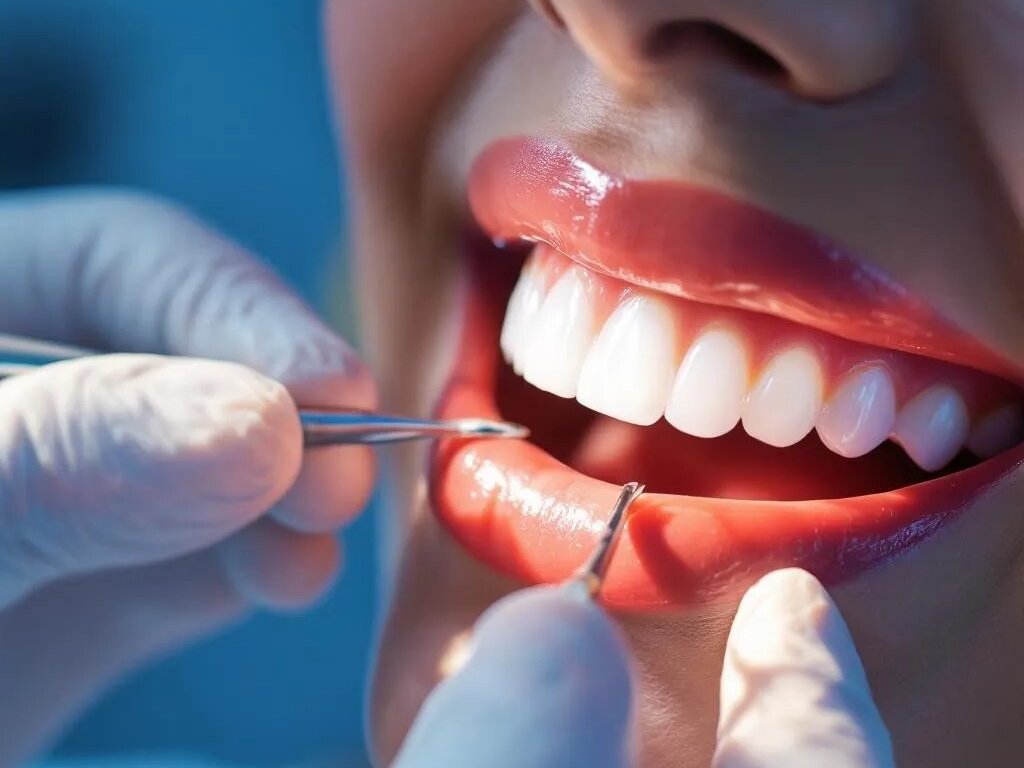
Dental veneers change more smiles than almost any other cosmetic treatment, yet the results depend heavily on which one is chosen. This guide walks through the different types of veneers available today, comparing porcelain, composite, lumineers, and non-prep options by material, cost, preparation, and how natural each looks on front teeth, so the comparison can support a more informed conversation with a dentist.
What Are Dental Veneers, Exactly?
Dental veneers are custom-made, tooth-colored shells bonded to the front surface of a tooth to change its shape, size, color, or length. Because each shell is fabricated to the individual’s dental anatomy, no two sets look identical, even when patients request a similar shade or style.
The treatment addresses chipped or cracked enamel, discoloration that resists whitening, and mild misalignment, offering an alternative to the longer timeline of orthodontics. Rather than replacing the tooth, a veneer sits over the visible surface, which is why the underlying dental structure and the patient’s bite still influence the final result.
With Smile Team Turkey, dental restorations are planned around the patient’s existing oral condition rather than a single default option, since the various types of veneers available today serve fairly different needs. A dentist’s assessment beforehand tends to matter more than brand names or marketing claims when the outcome needs to last.
Types of Veneers Material: A Full Breakdown
The material behind a veneer determines how it looks under light, how long it tends to survive daily wear, and how much of the natural tooth needs to be altered beforehand. Four options dominate modern cosmetic dentistry, and each carries a distinct trade-off between durability, cost, and how much of the original tooth is preserved.
Porcelain Veneers
Porcelain veneers remain the benchmark for durability and light-reflecting realism. A thin, custom-fired ceramic shell is bonded to the tooth after the dentist removes a thin layer of enamel, which allows the shell to sit flush rather than bulky against the gumline.
Because porcelain mimics the translucency of natural enamel, it tends to blend seamlessly with surrounding teeth, particularly under artificial lighting where composite resin can look flat by comparison. A systematic review covering more than 6,500 porcelain laminate veneers reported a 10-year cumulative survival rate of 95.5%, with fracture, debonding, and secondary decay each accounting for a small share of the cases that failed. That figure places porcelain among the more predictable long-term investments in cosmetic dentistry, provided the placement itself is handled with care.
Composite Veneers
Composite veneers use a tooth-colored resin sculpted directly onto the tooth, often within a single appointment. Compared with porcelain, the material costs less, requires less laboratory involvement, and can sometimes be adjusted chairside without a second visit.
The trade-off shows up over time. Composite resin absorbs pigment from coffee, tea, or red wine more readily than porcelain, and its surface is more prone to minor chipping under everyday pressure, which generally translates into a shorter lifespan and more frequent touch-ups than porcelain. For patients prioritizing a lower upfront cost or a same-day fix over long-term durability, composite remains a reasonable middle ground.
Lumineers
Lumineers are a proprietary, ultra-thin veneer system designed to bond with minimal to no enamel removal. Because so little of the natural tooth structure is altered, the process is frequently reversible, which appeals to patients hesitant about permanent changes.
The thinness that makes lumineers minimally invasive also limits how much discoloration or misalignment they can mask. Teeth with heavier staining or noticeable gaps may show shadowing through an ultra-thin shell, so a dentist’s evaluation of the starting tooth color matters before committing to this route.
Non-Prep Veneers
Non-prep veneers occupy similar territory to lumineers: minimal enamel removal, a faster clinical process, and the option to reverse the treatment if the patient’s preferences change. They are custom-fabricated like porcelain veneers but designed to sit over the tooth rather than replace a layer of its surface.
Because natural tooth structure stays largely intact, non-prep veneers suit patients with reasonably well-aligned, lightly discolored teeth. Teeth that protrude, overlap, or carry deeper staining generally respond better to a prepared veneer, where enamel removal creates room for a more corrective result.
Veneers and Cost: What Influences the Price
Cost varies by material, laboratory fees, the number of teeth being treated, and the clinic’s location, so a single number rarely tells the full story. Rather than listing fixed prices that shift by clinic and country, the table below compares the four veneer types on the factors that most directly affect what a patient ends up paying and how long the investment lasts: the material used, how the material tends to hold up over time relative to the alternatives, how much of the natural tooth is removed beforehand, and whether the treatment can be reversed later.
| Veneer Type | Material | Durability (relative) | Enamel Removal | Reversibility |
| Porcelain | Ceramic | Highest; a peer-reviewed review found a 95.5% survival rate at 10 years | Moderate | Not reversible |
| Composite | Resin | Shorter than porcelain; more prone to staining and chipping | Minimal | Partially reversible |
| Lumineers | Proprietary ceramic | Comparable to porcelain in well-maintained cases | Minimal to none | Often reversible |
| Non-Prep | Ceramic | Comparable to porcelain in well-maintained cases | Minimal | Often reversible |
Beyond material, the number of teeth involved shapes the total cost more than most patients expect, since a single front-tooth restoration differs substantially in price from a full upper arch. Clinics that include diagnostics, temporary veneers, and follow-up adjustments in one quoted fee tend to offer more predictable budgeting than those pricing each stage separately.
Veneers Preparation: What Happens Before Placement
Preparation is the stage where the chosen veneer type most visibly diverges from the others. Porcelain restorations call for enamel reduction and a temporary veneer while the permanent shells are fabricated in a laboratory, which introduces a short waiting period between the first appointment and the final placement.
Composite veneers skip the laboratory step entirely, since the resin is shaped and cured directly on the tooth during the same visit. Lumineers and non-prep veneers fall between the two: minimal enamel removal, no temporaries in most cases, but still a laboratory turnaround for the custom shells.
Regardless of material, an initial consultation involving X-rays, a bite assessment, and a discussion of shade and shape precedes every case. Teeth affected by active decay or gum disease generally require treatment first, since a veneer bonded over an unhealthy foundation is unlikely to hold as intended.
What Type of Veneers Look Most Natural for Front Teeth
Front teeth carry more visual weight in a smile than any other, which is why the question of which type of veneers look most natural comes up so often during consultations. Porcelain tends to lead this comparison because of how it interacts with light, but “natural” also depends on factors specific to the patient’s face and existing teeth. The list below outlines the elements that most influence how convincing a front-tooth veneer looks in everyday lighting, not just under a dental office’s overhead lamp.
- Translucency that mimics how light passes through real enamel, which porcelain replicates more closely than resin
- A shade gradient that matches neighboring teeth rather than a uniform, flat white
- Tooth and face shape, since a veneer proportioned to a narrow face can look noticeably different than one designed for a broader jawline
- Symmetry with adjacent teeth, so the restoration doesn’t stand apart from the rest of the smile
- Gumline contour, which affects how balanced the finished restoration appears when smiling
A dentist who reviews facial proportions alongside tooth color and alignment is generally better positioned to recommend which material suits front-tooth restorations than a generic comparison chart.
How Dental Veneers Are Applied
The clinical process follows a fairly consistent sequence across most veneer types, with variations mainly in how much enamel is altered and whether a laboratory step is involved. The steps below outline that general sequence, from the first consultation through the final adjustments made once the veneer is bonded in place.
- Initial consultation, including X-rays and a discussion of the desired shape, shade, and coverage
- Tooth preparation, where a thin layer of enamel is removed if the chosen veneer type requires it
- Impressions or digital scans sent to a laboratory for custom fabrication, except with same-day composite veneers
- Temporary veneers placed while permanent restorations are being made, when applicable
- Bonding of the final veneer using dental adhesive, followed by curing with a specialized light
- Bite and color adjustments, checked while the patient is still in the chair
A follow-up visit often catches minor adjustments that only become noticeable once the patient has worn the veneers through a normal day of eating and speaking.
Caring for Veneers Long-Term
Longevity depends heavily on daily habits, regardless of which material was chosen. A soft-bristled toothbrush paired with non-abrasive toothpaste tends to protect the veneer’s surface better than firmer bristles, which can dull porcelain’s polish over years of use.
Coffee, tea, and red wine carry a higher staining risk for composite veneers than for porcelain, though neither material is entirely immune to gradual discoloration. Ice, hard candy, and nail-biting introduce chipping risk that has little to do with material quality and more to do with mechanical stress on a thin shell.
Regular dental visits, generally recommended twice a year, allow small issues such as a hairline crack or a loosening edge to be caught before they become costly repairs. Patients who grind their teeth at night benefit from mentioning it during consultation, since a custom nightguard often extends a veneer’s lifespan considerably compared with leaving bruxism unaddressed.
You can reach our previous article from https://smileteamturkey.com/blog/choosing-oral-care-products-according-to-caries-risk-profile/
Frequently Asked Questions About Veneer Types
Can veneers be whitened after they’re placed?
Porcelain and composite veneers don’t respond to traditional whitening treatments the way natural enamel does, since the material itself doesn’t absorb bleaching agents. Any shade adjustment typically requires replacing the veneer rather than whitening it.
Do veneers feel different from natural teeth?
Most patients adjust within a few days. Slight differences in texture or bite sensation are common initially, though a well-fitted veneer should feel comparable to a natural tooth once adjustments are finalized.
Is it possible to get veneers on just one or two teeth?
Yes, single-tooth veneers are common, particularly for a chipped or discolored front tooth. Matching the shade and shape to neighboring teeth becomes more critical in these cases than in a full-arch restoration.
What happens if a veneer cracks or falls off?
A cracked or detached veneer should be brought to a dentist promptly rather than left unaddressed, since the exposed underlying tooth can be more vulnerable to decay or sensitivity in the interim.
Are veneers covered by dental insurance?
Veneers are generally classified as cosmetic, so most insurance plans don’t cover them unless the restoration also addresses a functional issue, such as a fracture. Coverage specifics vary by provider and policy.