
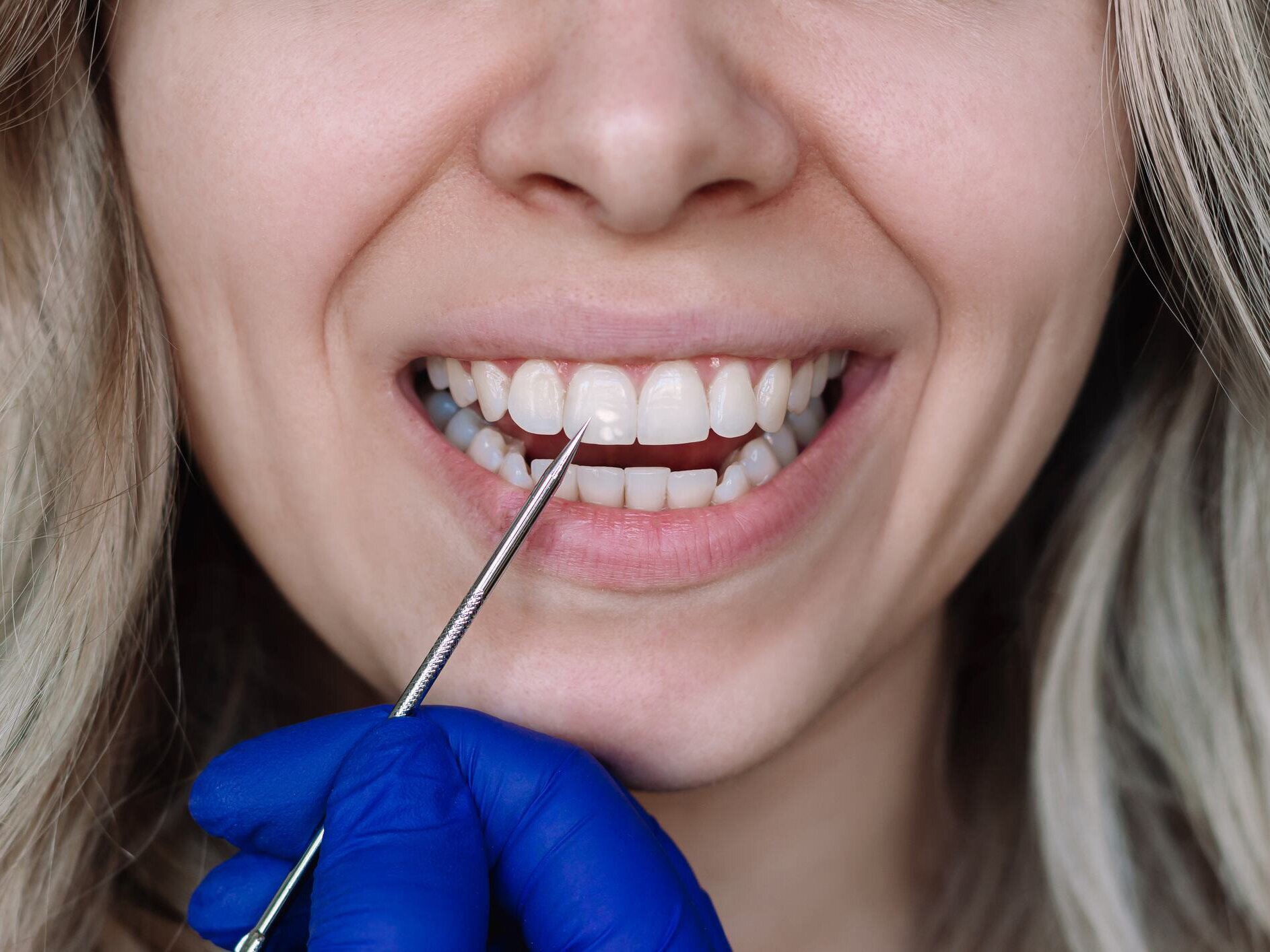
White spots on teeth can appear seemingly out of nowhere, whether after a night’s sleep, months of orthodontic treatment, or years of everyday habits. While the change in colour often causes concern, it rarely signals an emergency. This article walks through the most common causes behind white spots on teeth, explains which ones fade naturally and which require professional care, and offers practical guidance on treatment and prevention for both adults and children.
What Causes White Spots on Teeth?
White spots on teeth are areas where the enamel has lost minerals or developed unevenly, creating a chalky or opaque patch that looks different from the surrounding tooth surface. In some cases, the change happens within weeks; in others, it develops slowly over months or years. The underlying cause determines how the spot behaves, whether it needs treatment, and how easily it can be addressed.
White Spots on Teeth That Appear Overnight
Some people notice white spots on teeth appear overnight, particularly right after waking up. This is usually not a sign of decay. Sleeping with the mouth open reduces saliva flow across the teeth, and the enamel surface temporarily dehydrates. Once saliva returns to normal levels throughout the day, the white patches often fade on their own. This is one of the few forms of tooth discolouration that resolves without any dental intervention.
Decalcification and Demineralization
Decalcification, also called demineralization, occurs when acids produced by oral bacteria strip calcium and phosphorus from the enamel. These acids come from sugary or starchy food residue left on the teeth, especially near the gumline or around orthodontic brackets. The result is a visible white or milky mark, sometimes described as a “calcium mark” on the tooth. If plaque continues to sit on the enamel, the weakened surface can eventually collapse into an actual cavity.
Turner’s Tooth (Enamel Hypoplasia)
Turner’s tooth, clinically known as enamel hypoplasia, is a developmental condition in which the enamel forms with reduced thickness or quality. It typically originates during childhood tooth development and can be linked to malnutrition, smoking during pregnancy, premature birth, or high fevers during illness. Teeth affected by this condition tend to be more sensitive and slightly more prone to wear in the affected areas, so dentists usually recommend monitoring them at regular checkups.
Fluorosis in Children
Dental fluorosis is one of the most frequent causes of white spots on teeth in children. It develops when a child is exposed to more fluoride than their developing teeth require, often through swallowing toothpaste, drinking fluoridated tap water, or taking fluoride supplements unnecessarily.
White Spots on Teeth from Braces
White spots on teeth caused by braces are a well-documented concern in orthodontics. Brackets and wires create surfaces where plaque accumulates more easily, particularly around the edges of each bracket. If oral hygiene is inconsistent during treatment, the enamel underneath can demineralize, leaving a white outline once the braces are removed. This is essentially the same demineralization process described above, concentrated in the areas brackets used to cover.
Are White Spots on Teeth Permanent?
Whether white spots on teeth are permanent depends entirely on their cause. Overnight dehydration spots and some very early demineralization marks can reverse on their own or with improved hygiene. Fluorosis marks and Turner’s tooth, however, involve a structural change to the enamel itself, so they generally do not disappear without cosmetic treatment such as whitening, microabrasion, or veneers. A dentist can usually tell the difference through a simple visual exam, sometimes supported by drying the tooth surface to see how the spot reacts to light.
White Spots on Teeth That Come and Go
Spots that come and go are almost always related to hydration and saliva flow rather than a structural enamel problem. Because saliva contains minerals that help remineralize enamel, any drop in saliva coverage, whether from mouth breathing, dehydration, or dry mouth caused by medication, can make existing faint spots temporarily more visible. Once moisture returns, the enamel reflects light more evenly, and the spot appears to vanish. If a spot never fully disappears regardless of hydration, it points toward a more permanent cause such as fluorosis or decalcification.
How to Remove White Spots on Teeth
Treatment options range from simple hygiene adjustments to professional cosmetic procedures, depending on how advanced the spot is. The list below moves from the least invasive options to the ones typically reserved for spots that have not responded to anything else:
- Improving brushing and flossing consistency to halt active demineralization
- Professional fluoride varnish applied by a dentist to remineralize weakened enamel.
- Microabrasion, where a dentist gently polishes away the outer layer of discoloured enamel
- Composite resin fillings matched to the tooth colour if the spot has cavitated.
- Professional teeth whitening to even out the contrast between the spot and surrounding enamel
- Porcelain veneers for spots that are cosmetically significant and unresponsive to other treatment
How to Remove White Spots on Teeth Naturally
Many patients search for how to remove white spots on teeth naturally before considering in-office procedures. While no home remedy can reverse fluorosis or enamel hypoplasia, early-stage demineralization spots may respond to the following daily habits, all of which support the enamel’s own ability to reabsorb minerals:
- Brushing twice daily with fluoride toothpaste to support remineralization
- Rinsing with water after meals to neutralize acid before it affects enamel
- Limiting frequent snacking and sugary drinks between meals
- Chewing sugar-free gum to stimulate saliva flow, which naturally redeposits minerals
- Using a remineralizing toothpaste containing calcium phosphate, if recommended by a dentist
These habits work best on spots caught early. Once enamel structure has changed permanently, a dental visit is the more realistic path forward.
White Spots on Teeth in Children
White spots on teeth in children are common enough that most pediatric dentists address them as a routine part of checkups. Fluorosis and early demineralization are the two leading causes at this age, both of which are largely preventable with supervision. Parents are generally advised to use no more than a pea-sized amount of fluoride toothpaste, watch that children spit rather than swallow it, and schedule a dental exam if new spots appear, since catching demineralization early allows for the least invasive treatment.
How to Prevent White Spots on Teeth
Prevention differs slightly depending on the underlying risk, but the following practices address most causes. Several of them, such as brushing time and toothpaste amount for children, follow the American Dental Association’s standard guidance for healthy enamel:
- Brush and floss teeth thoroughly, twice a day, for a full two minutes each time
- Rinse with water after eating or drinking to neutralize acid on the enamel.
- Avoid constant snacking or sipping sugary drinks throughout the day.
- Supervise children’s toothpaste use to prevent excess fluoride intake, keeping it to a pea-sized amount.
- Clean carefully around orthodontic brackets if wearing braces.
- Attend regular dental checkups to catch early demineralization before it progresses.
Comparing Common Causes of White Spots on Teeth
The table below summarizes the four causes covered in this article side by side, making it easier to see which ones tend to resolve on their own and which typically need a dentist’s help:
| Cause | Typical Age Group | Reversible? |
| Enamel dehydration (overnight) | Any age | Yes, resolves on its own |
| Decalcification/demineralization | Any age, common with braces | Early stages, yes; advanced stages, no |
| Turner’s tooth (enamel hypoplasia) | Develops in childhood | No, cosmetic treatment needed |
| Fluorosis | Children (developing teeth) | No, cosmetic treatment needed |
White spots on teeth rarely signal an emergency, but their cause always shapes the right response, from patience to a simple dental visit.
Frequently Asked Questions About White Spots on Teeth
Do white spots on teeth mean I have a cavity?
Not necessarily. A white spot can indicate early demineralization, which is a warning sign that precedes a cavity, but it is not a cavity itself. A dentist can check whether the surface is still intact.
Can toothpaste alone get rid of white spots on teeth?
Regular fluoride toothpaste supports remineralization but cannot resolve fluorosis or enamel hypoplasia. For those cases, professional treatment such as microabrasion or veneers is usually necessary.
Why do white spots on teeth show up after getting braces off?
They usually result from plaque buildup around brackets during treatment. Consistent cleaning around brackets throughout orthodontic treatment lowers this risk significantly.
Is it safe to whiten teeth that already have white spots?
Whitening can sometimes make the contrast between the spot and the rest of the tooth more noticeable at first, since surrounding enamel lightens while the spot may not. A dentist can advise on the best sequence of treatment.
How long does it take for a white spot to turn into a cavity?
This varies significantly by individual, diet, and how quickly plaque is removed, so there is no fixed timeline. What matters more than the exact speed is catching it early; regular brushing and dental visits remain the most reliable way to stop the process before it reaches that stage.
Should I worry if my child has white spots on their baby teeth?
It’s worth mentioning at their next dental visit. Baby teeth are more prone to fluorosis and early decay due to thinner enamel, so early evaluation helps prevent progression into adult teeth.
You can reach our previous article at https://smileteamturkey.com/blog/what-are-dental-x-rays/